"Safe Space" Isn't a Buzzword… It's a Practice
There's a phrase that gets thrown around a lot in wellness circles, education spaces, and increasingly in fitness and martial arts communities: safe space. And like most phrases that travel far and fast, it has collected a lot of baggage along the way: eye-rolls, misinterpretations, and the occasional political football.
But underneath the noise, the concept points to something real, something that matters enormously in self-defense education, and something that most spaces — even well-intentioned ones — are still figuring out how to actually do.
Let's slow down and look at what a safe space really means, and what it has to do with trauma-informed care.
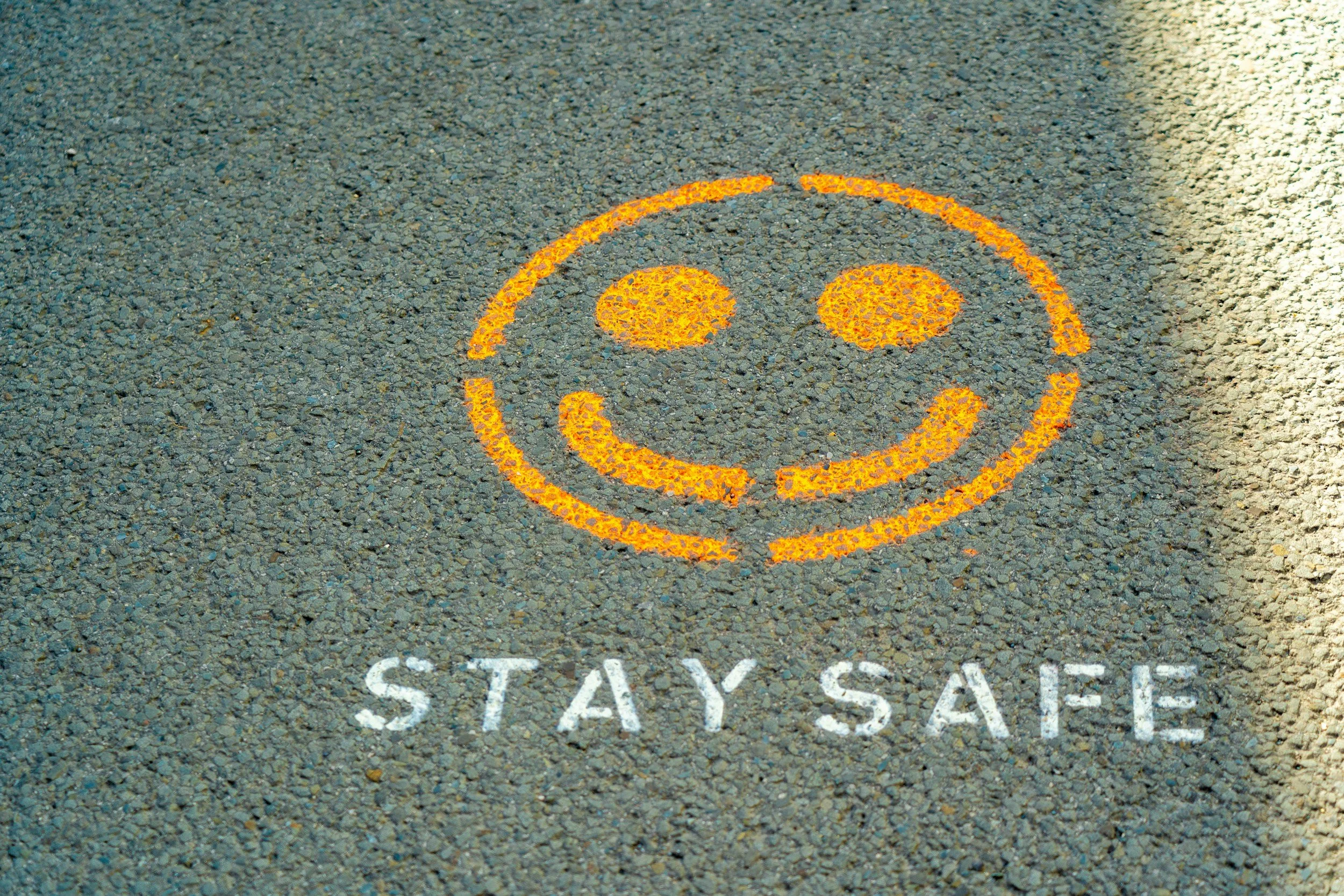
What a Safe Space Actually Is (and Isn't)
A safe space is not a place where nothing hard is discussed. It's not a room where you avoid conflict, skip the difficult conversation, or pretend the scary parts of life don't exist. If anything, a genuine safe space is the prerequisite for going into hard territory by building the container of trust that makes it possible to do the real work.
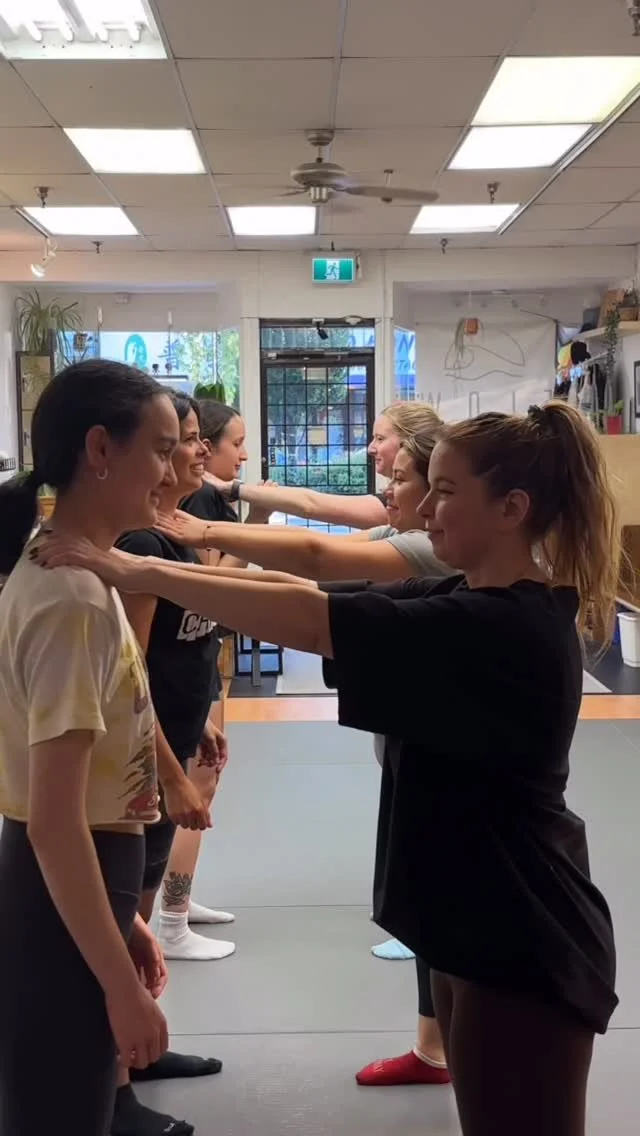
A safe space is an environment where people believe they won't be judged, humiliated, or re-traumatized for showing up as they are. Where, in a self-defense class for example, they can say "I don't want to be grabbed from behind" without needing to explain why. A safe space is where they can struggle, ask beginner questions, or take a breath or break when they need one.
In self-defense education specifically, that matters more than in almost any other context.
Why Self-Defense Spaces Carry Unique Weight
Think about who walks into a self-defense class.
Some people come because they've experienced violence and want to feel less powerless. Some come because a friend pushed them into it and they're already bracing to be judged for how unfit or uncoordinated they think they are. Some come because something happened recently — an assault, a close call, a news story — and their nervous system is still running hot.
Some come because they've spent their whole lives being told their bodies are not their own to protect.
That's a lot to bring into a room where you're immediately being asked to move your body, make contact with strangers, simulate threat scenarios, and learn to fight back.
A self-defense instructor who doesn't account for this is not running a neutral class — they're running one that works well for people who aren't carrying much. It works poorly (or worse) for the people who need it most.
The Problem Hidden in Plain Sight
It would be convenient to talk about safe spaces in martial arts as a theoretical concern. It isn't.
In early 2026, the Brazilian Jiu-Jitsu (BJJ) community was rocked by allegations against Andre Galvao, one of the most decorated BJJ competitors of all time and leader of Atos, one of the world's largest academies with nearly 100 affiliate gyms globally. Multiple students came forward with accounts of sexual misconduct. Alexa Herse, a long-time juvenile competitor, released a detailed statement alleging repeated advances and that when she tried to raise concerns internally, they were covered up rather than addressed.
Weeks later, Melqui Galvao — widely considered the most prominent BJJ coach in Brazil, unrelated to Andre — was arrested on charges including alleged sexual assault of minors from his juvenile program. Evidence emerged of him offering a black belt promotion and a school in Florida in exchange for silence. Students reported that his extensive connections to local police had prevented earlier complaints from moving forward.
These are not isolated incidents. An independent report from 2020 found that one in five reported incidents of sexual harassment or assault within the BJJ community were perpetrated by black belts — people in positions of explicit authority. That figure is more than double the rate of sexual violence by authority figures in the broader population. The pattern is not a coincidence. It is a structural problem.
What enables it? The same thing that makes traditional martial arts spaces resistant to questions, challenges, and accountability: hierarchy treated as sacred. The instructor's word as law. Silence coded as respect. Complaints are managed internally, or not at all.
This is why the conversation about safe spaces in martial arts is not abstract or political, but vitally important to address.
I say this as someone who loves BJJ, who holds a Gracie Jiu Jitsu Women Empowered certification, and who has seen what the art can do for people when it is taught with integrity. The problem isn't the art, but the culture around it that’s been allowed to grow. It’s why we must lead with a trauma-informed approach and cultivate a new culture in these spaces.
So What Does "Trauma-Informed" Actually Mean?
This is where things get murky, because "trauma-informed" has become its own buzzword. It’s applied loosely to everything from yoga classes to corporate workshops, sometimes functioning more as branding than actual practice.
Here's the clear version of a trauma-informed approach.
Trauma is not just what happened to you. It's what happened inside your nervous system as a result — the adaptations your body and mind made to survive an experience that overwhelmed your capacity to cope. Those adaptations don't disappear when the danger does. They become embedded in the way you move through the world: how you respond to perceived threat, how you feel in your body, what situations trigger a cascade of fear, freeze, or shutdown.
To be trauma-informed means to understand that this is real, that it's not a character flaw, and to structure your environment and your teaching accordingly.
It does not mean:
Asking participants to disclose their trauma history
Turning a self-defense class into a therapy session
Treating everyone as fragile or assuming they can't handle challenge
Avoiding anything that might ever be triggering for anyone
It does mean:
Giving people agency and choice throughout: "you can opt out of any drill at any time, no explanation needed"
Using clear, predictable structure so participants aren't caught off guard
Not requiring physical contact without explicit, ongoing consent
Framing corrections with respect and without shame
Recognizing when someone may be activated and responding with calm, not urgency
Understanding that a participant going quiet, dissociating, or leaving the room is a nervous system response, not rudeness
The most important shift is this: trauma-informed practice moves the question from what is wrong with this person? to what has this person experienced, and how can I structure this environment to meet them where they are?
The Expert in the Room (Hint: It's Not Always Me)
One of the things I come back to again and again as an instructor is this: I may be the expert in certain techniques, but my students are the experts in their own lives.
That sounds simple. But it runs counter to how a lot of traditional martial arts spaces operate. Often, these environments are where the instructor's word is absolute, questions are discouraged, and the expectation is compliance over curiosity. I've seen how this has produced technically proficient students who have learned to override their own instincts, defer to authority, and disconnect from what their bodies are telling them. Which is, ironically, exactly the opposite of what self-defense training should build.
In my classes, questions are not only allowed — they're evidence that something is working. When a participant pushes back on a technique, asks why we do it this way, or says "that doesn't feel right for my body," that's not disruption. That's someone practicing exactly the kind of self-trust and boundary-setting that will actually keep them safe in the world.
The classroom is where it starts. The no they say to me in a drill is the no they say to someone who matters.
What I've Learned from Watching People Surprise Themselves
Some of the moments that have shaped me most as an instructor are the small ones.
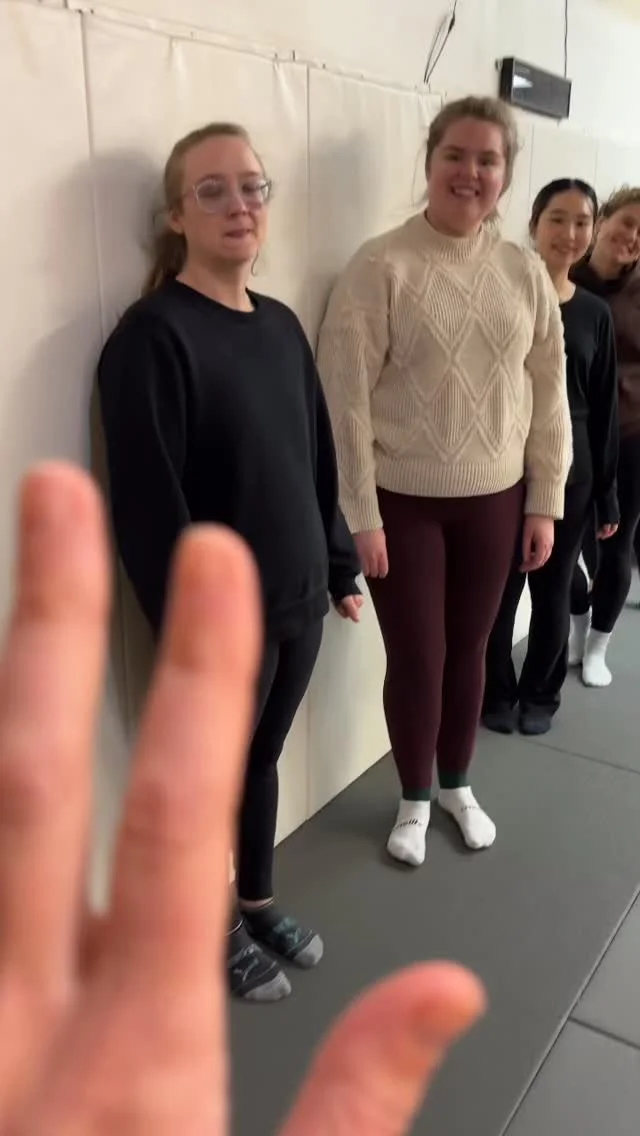
I remember one woman who arrived with her arms crossed and her face hard. She was clearly communicating (without any words) that she didn’t want to be there and didn't expect to get anything out of it. I gave her space and an invitation to join, but didn’t try to push her along at all. By the end of the first hour she was laughing, drilling hard, and asking when the next session was. I've learned to read those early signals as a kind of self-protection. She didn't trust the space yet, but once that trust was built, she loved it.
I remember another participant who pulled me aside after class and simply said, I've never been in a room where I felt like I could say no to something and have that be okay. She wasn't talking about a specific drill, but the bigger experience of her own voice being treated as valid.
I've also learned that safety shows up non-verbally before it shows up in words. When someone's shoulders drop, when they make eye contact instead of staring at the floor, when they start talking to the person next to them — that's the nervous system settling. That's trust being built in real time. And I've come to understand that my job, as much as teaching technique, is to create the conditions for that to happen.
People don't share hard things with you because you asked them to. They share because you've shown them the room is safe enough to hold it.
The Paradox of Safety in Self-Defense Training
Here's where it gets interesting: self-defense training, by its nature, involves practicing discomfort. We talk about and simulate threat. We train to override the freeze response. We practice getting up after being taken down. We do hard, uncomfortable things on purpose — because that's how the body learns.
So how do you create safety and train for danger?
The answer is that psychological safety and physical challenge are not opposites. In fact, psychological safety is what makes real physical challenge possible.
When a participant trusts the space — the instructor, their training partners, and that they can say "stop" and be heard — they can go further. They can drill a scenario that scares them. They can sit with the discomfort of learning something new instead of shutting down or leaving. They can come back next week.
When they don't trust the space, the opposite happens and they won’t return.
Safety isn't softness. It's the foundation that makes hard work sustainable.
When Students Take the Wheel
One of the most powerful things I see happen in class is when someone exercises autonomy for the first time, often visibly surprised by their own ability to do it.
Picture a participant mid-drill who pauses, steps back, and says: actually, I don't want to do this one, without an elaborate explanation or apology spiral. Just a simple “no.”
The first time it happens for someone, there's often a beat of held breath as they wait to see how the room responds. When the response is simply "absolutely, no problem, here's an alternative,” something shifts. You can see it. They stand a little differently for the rest of the class.
That moment of taking up space, of trusting their own read of a situation, of saying no and having it received — that's not a small thing. For many people, it's the first time they've done it without consequence. And it transfers. It goes home with them.
This is why I'm deliberate about building choice into every part of class. Not because the techniques aren't important — they are — but because the experience of having agency over your own body, and having that agency respected, is itself a form of self-defense education. It's arguably the most important one.
What This Looks Like in Practice
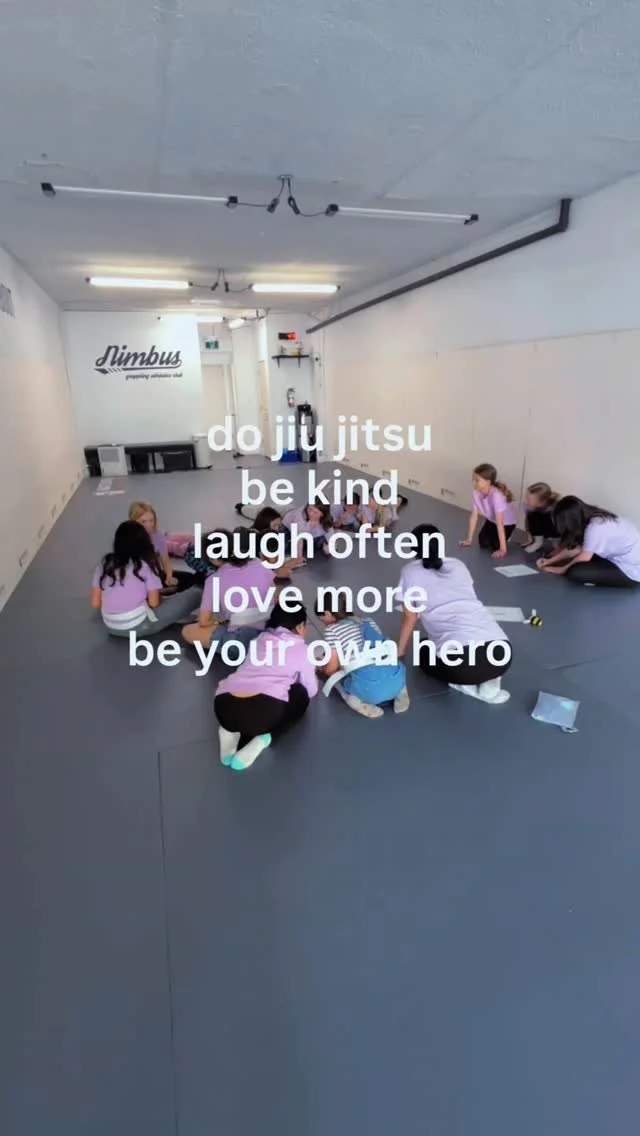
Creating a genuinely safe space in self-defense education looks like:
Clear, transparent structure. Tell participants at the start what to expect: the kinds of drills you'll do, the kinds of contact involved, how to signal if they need to pause. Predictability itself is regulating for a nervous system that's been conditioned to expect unpredictability.
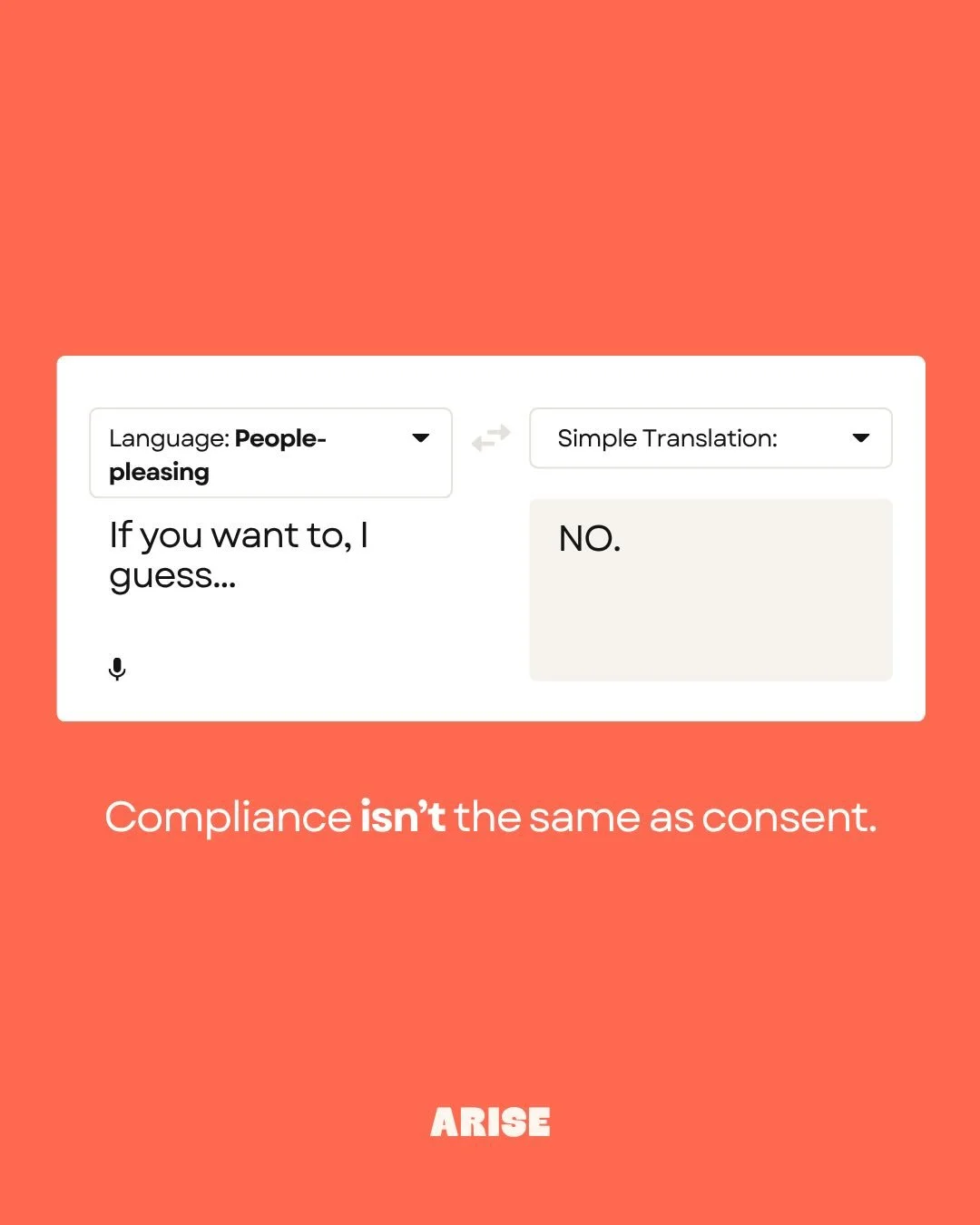
Opt-in, not opt-out. Consent is an active yes, not the absence of a no. In drill-based work, this means checking in before contact, not assuming silence is agreement.
Language that dignifies, not pathologizes. Avoid framing participants as victims who need saving. The language of empowerment is not "you're vulnerable, here's how to survive" — it's "you already have instincts and strength, and we're going to develop those."
The instructor's own nervous system regulation. Trauma-informed practice starts with the teacher. An instructor who responds to a participant's shutdown with frustration, who pushes through obvious distress, or who treats emotional responses as disruptions — that instructor is not trauma-informed, regardless of the language they use. The capacity to hold space for others comes from doing the internal work yourself.
Normalizing a range of responses. In any group of people doing embodied work around safety and threat, someone is going to cry, or freeze, or go quiet. That's a completely understandable response, and normalizing it out loud ("sometimes people have strong reactions in this work, and that's okay, we'll go at your pace") reduces shame and keeps the door open.
The Harder Conversation
Creating safe spaces in self-defense education asks instructors to hold two things at once: genuine respect for the experience participants bring into the room, and genuine belief that those participants are capable of developing real skill, real confidence, and real power.
The failure mode in one direction is dismissiveness, running a class that moves too fast, assumes too much, and leaves people who weren't already confident feeling worse than when they came in.
The failure mode in the other direction is over-protection, treating participants as too fragile for challenge, too broken to grow, too traumatized to be asked to do hard things. This, too, is a failure, and it's one that often hides behind good intentions.
The goal isn't to make people comfortable. It's to make people capable — and to build the environment where that's actually possible.
That's what a safe space is for.
Arise Self-Defense offers empowerment self-defense programs for women and teens, kids, schools, and workplaces across Metro Vancouver. Our work begins long before any physical technique — with voice, boundaries, and the knowledge that safety starts with you.