Measuring What Matters
What comes to mind when you think of self-defense? Is it someone “fighting back”? An aggressive punch? Eye gouging? Maybe it’s high intensity, adrenaline-fuelled, and chaotic.
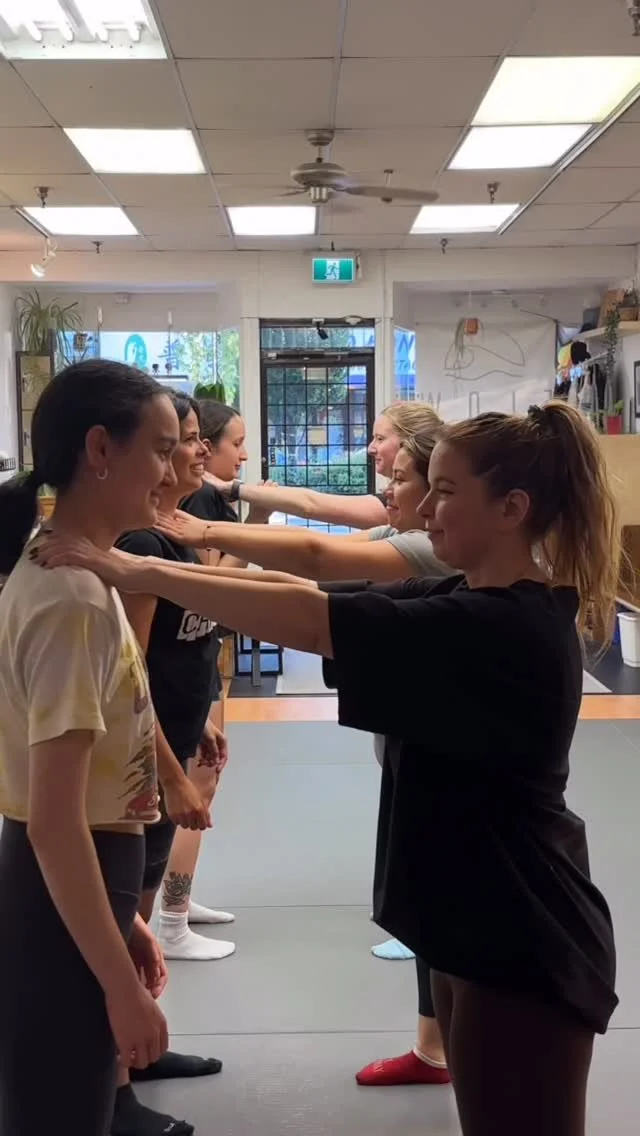
When it comes to Empowerment Self-Defense (ESD) training there’s actually a lot that doesn’t look very dramatic from the outside. It’s woven in between the wrist releases, the movement drills, and verbal exercises, and is what I consider to be equally valuable, if not more. It’s a participant pausing, noticing their discomfort, and deciding, “No, I’ve had enough.” That shift matters because it’s not about performing or doing the right or expected thing; it’s an internal and highly personal moment of self-belief.
As someone passionate about empowerment and violence prevention, the question I find myself asking is: how do we know what we’re doing is working, or even helpful, when the most meaningful changes can be so subtle?
Below are some thoughts, plus a few more questions around assessment, common challenges and critiques, teaching this in schools, trauma-informed approaches, and more.
Defining Empowerment
A big part of the problem may be that we use the word empowerment like everyone agrees on what it means, but I don’t think we do. I’m cautious with the term because it can imply “giving power to,” which sets up a weird hierarchy: teacher as the giver or authority, students as the ones lacking something. That framing doesn’t sit well with me, especially when I’m working with individuals who may already be navigating unequal power in the world, just as I am. I may be an expert on some techniques and how to facilitate group discussions, but I am not the expert of their lives. But I digress.
In the context of violence prevention, I like to define empowerment as having more choice and self-efficacy, especially in situations where power is uneven. More practically, it’s the capacity to notice what’s happening, believe you’re allowed to respond, and take a protective action that fits your context. It’s not just a feeling; it’s a set of skills and conditions working together.
The Hidden Curriculum
As I mentioned already, much of the learning in ESD often sits underneath the obvious curriculum. Yes, people learn physical techniques, boundary-setting scripts, and situational awareness. But many leave with something harder to pin down or observe: a changed sense of entitlement to safety and respect, a reduced obligation to be “nice,” and a stronger belief that their instincts and needs are legitimate.
In practice, those inner shifts can be the difference between freezing and acting, between minimizing a red flag and responding to it early, between staying silent and seeking help.
I often say that someone may know all the techniques in the world perfectly, but if they don’t believe they are worth being safe and respected, they won’t use those techniques when it matters most. We’ve seen versions of this even in public stories about professional female MMA fighters experiencing domestic abuse.
Exploring & Assessing Impact
The case for assessing ESD outcomes may seem pretty straightforward. We want to know we are making an impact, but if the hidden curriculum is where many participants experience the biggest transformations, our evaluation frameworks may be partially misaligned (if they exist at all).
In our observations, we tend to measure what’s easiest: positive feedback, regular attendance, knowledge of skills, recall of strategies, demonstration of correct technique, or “confidence” indicators. But the deeper learning is behavioural, it shows up in choices and follow-through in moments outside the class. Which is not so easy to assess.
We’re also dismantling societal programming, and that doesn’t happen overnight or with the practice of a few punches and kicks. Real-life moments will often feel scary, vulnerable, inadequate, messy, and chaotic, not “confident”.
Challenges for Schools
In British Columbia, self-defense training falls under the Physical and Health Education (PHE) curriculum. It isn’t called “self-defense” of course, perhaps because of assumptions around what people think self-defense is. Most think it’s “learning to fight”. But if you look closely, the curriculum centres personal safety in age-appropriate ways. Even in the early grades, students are asked to build the foundations of awareness and response. For example:
Kindergarten: Identify and describe unsafe or uncomfortable situations
Grade 1: Describe ways to prevent and respond to a variety of unsafe and/or uncomfortable situations.
That language isn’t about fighting. It’s about noticing risk, naming discomfort, and practising options. In other words, the curriculum already makes space for safety education.
The real challenge is what educators feel able (and supported) to teach in schools. Unfortunately, many teachers don’t feel adequately prepared to teach these topics or skills. There’s often fear about what might come up, and little to no training on how to teach the physical skills and how to respond if something difficult comes to light. On top of that, many other learning objectives are competing for time, and very little funding to bring in experts for a week.
I get it. I’m a BC-certified teacher and have worked in schools since 2012. But not addressing these topics puts our students at risk, because where else are they learning these things?
Let’s get back to assessment, though.
Let’s say schools want to prioritize safety education for their students. The next question becomes: what counts as evidence that it’s working? If we only have a one-off lesson or a short unit, we can’t pretend we’ll solve bullying or prepare students for all worst-case scenarios. But we can teach and assess a few core competencies that sit upstream of harm and are realistic for school settings. It’s not about “fight readiness” as some may (wrongly) assume, but strengthening skills that reduce risk and increase a culture of care.
This is where I see ESD aligning naturally with social-emotional learning (SEL) and the development of social-emotional competencies. When you strip away the “self-defense = fighting” stereotype, so much of ESD is actually about the same capacities schools say they want to build: self-awareness (noticing discomfort), self-management (downregulating), social awareness (reading dynamics), relationship skills (boundaries and communication), and responsible decision-making (choosing next steps that move toward safety). For example, healthy relationships are a key protective factor when we’re talking about interpersonal violence among teens.
The difference is that ESD makes those skills embodied and applied. That’s why I often describe it as experiential SEL. It’s SEL you practise with your voice, your body, and your choices, in collaboration with others, not just learn about intellectually through a worksheet, lecture, or video.
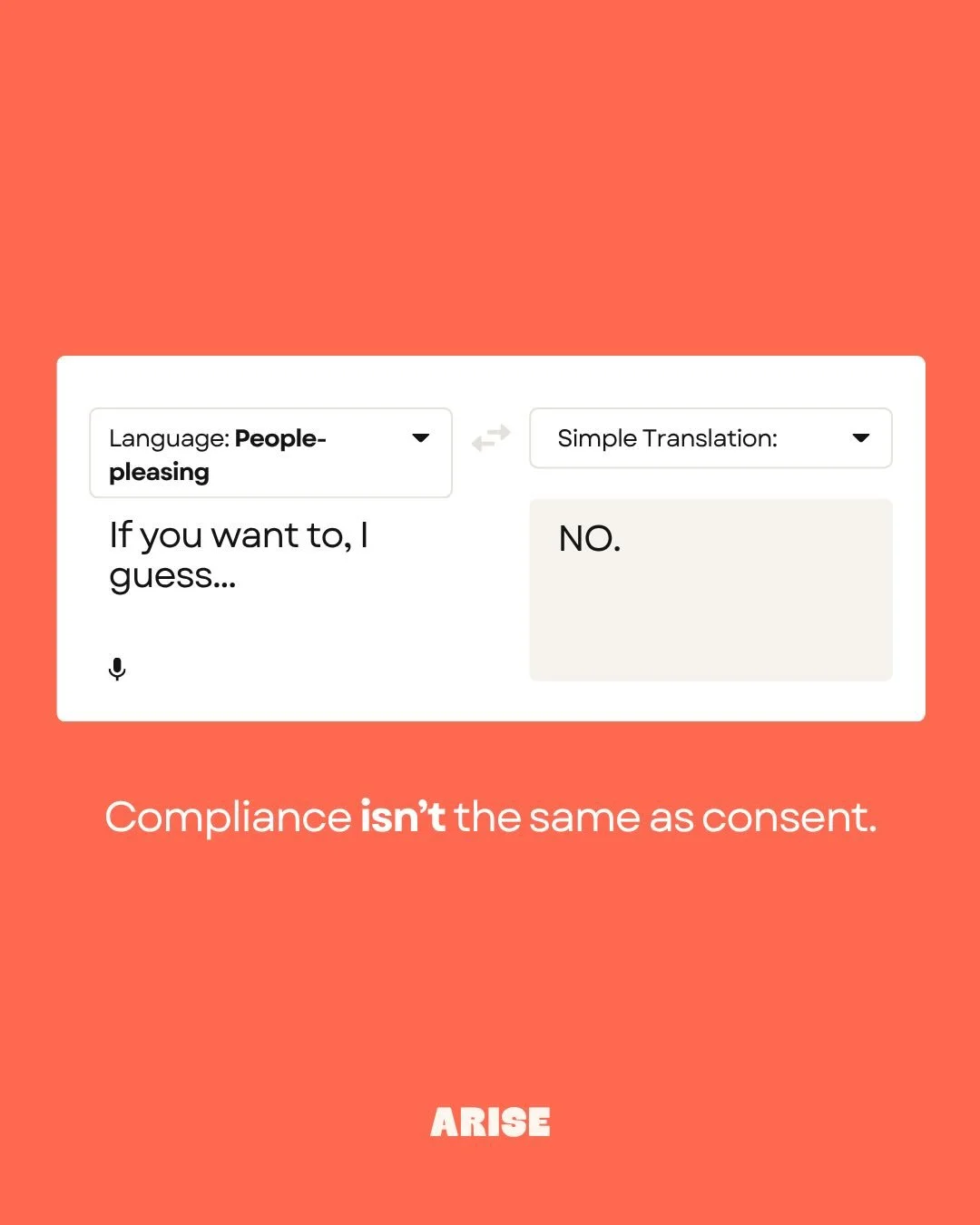
But without relying on worksheets, we have to vary our definition of “evidence.” We can’t solely rely on recall questions or tidy written outputs to tell us whether students are actually building social-emotional competence. The moment we start testing that way, incentives shift. Students start performing or answering with what they think adults want, especially in systems that already reward compliance and good grades. A rubric can quietly turn agency into a new form of “good behaviour” if we aren’t careful.
That defeats the purpose of what we’re trying to instill in our students: that they can, and sometimes should, push back against what’s wrong, harmful, or unsafe. That is what we want for them, right? Self-agency.
And self-agency doesn’t always look like “being confident” or “using your big voice.” Sometimes it looks like a quiet no. Sometimes it looks like walking away. Sometimes it looks like telling a friend, texting a parent, reporting to a counsellor, or trying again after the first adult didn’t respond so well.
Bias is another trap. The moment an assessment rewards “assertiveness,” we risk grading a culturally loaded style instead of a safety skill. Tone, eye contact, volume, and directness aren’t universal markers of competence. A student who says “no” quietly, makes an excuse to leave, or texts a friend for help might be doing the safest, smartest thing available, especially when the other person holds power. If we want assessments to be fair, we have to score protective function, not performance: did the student communicate a limit in some form, maintain it, take a safety-oriented action, and seek support when needed? Not, did they look confident doing it.
Additionally, context matters. What is safest or most realistic for one student may be different for another based on culture, race, gender identity, disability, neurodivergence, immigration status, family expectations, or past experiences. The same ‘skill’ can look different depending on who holds power in the moment, and what the consequences of speaking up might be.
Under Pressure & Trauma-Informed Approaches
A common criticism of self-defense training is that by training safely (non-combative, using safety equipment, and practising choreographed scenarios), we are actually training people to fail. There is an uncomfortable reality here: no one really knows how they’ll react under pressure when adrenaline, fear, shock, and chaos kick in.
Under threat, the nervous system can swing into fight/flight (sympathetic activation) or into freeze/shutdown (often parasympathetic immobilization). Either way, these responses are automatic, not moral failures.
With this in mind, my next question is: how can we teach (and assess) these skills “under pressure” without being triggering or unsafe? Newsflash, I don’t think the answer is to recreate fear.
ESD is preventative by design. The point isn’t to prove what someone would do at their edge. It’s to expand their options before things escalate: raise awareness, practise boundary-setting and help-seeking, and create a structured, safe space where students can talk, learn, and connect with others. We don’t need to push students into high-intensity scenarios just to “see” how they’d react.
Fear-based learning also isn’t very effective. When people feel threatened or judged, they tend to shut down, perform, or go into self-protection mode, which is the opposite of what we need for skill-building.
Adrenaline-based training is different. I have had the opportunity to participate and train under the Impact Personal Safety model, that utilizes padded instructors. It’s intense, and follows rigorous procedures to ensure safety for everyone. I’m not focusing on that here as it’s not ESD, but to highlight that adrenaline can be a training variable. Fear as a teaching tool is a different thing. Adrenaline-based training uses controlled intensity to practise skills while the body is activated, with clear consent, safety protocols, and opt-outs. Fear-based learning relies on intimidation, shame, or coercion to push behaviour, which often produces compliance or shutdown rather than real skill-building. Knowing this difference is essential, but moving on.
We also don’t know what students have experienced in the past, or what they might be navigating at home right now, and taking someone to the edge without proper care can be retraumatizing. The best learning environments prioritize psychological safety, choice, and clear boundaries, especially when the content touches on power and harm.
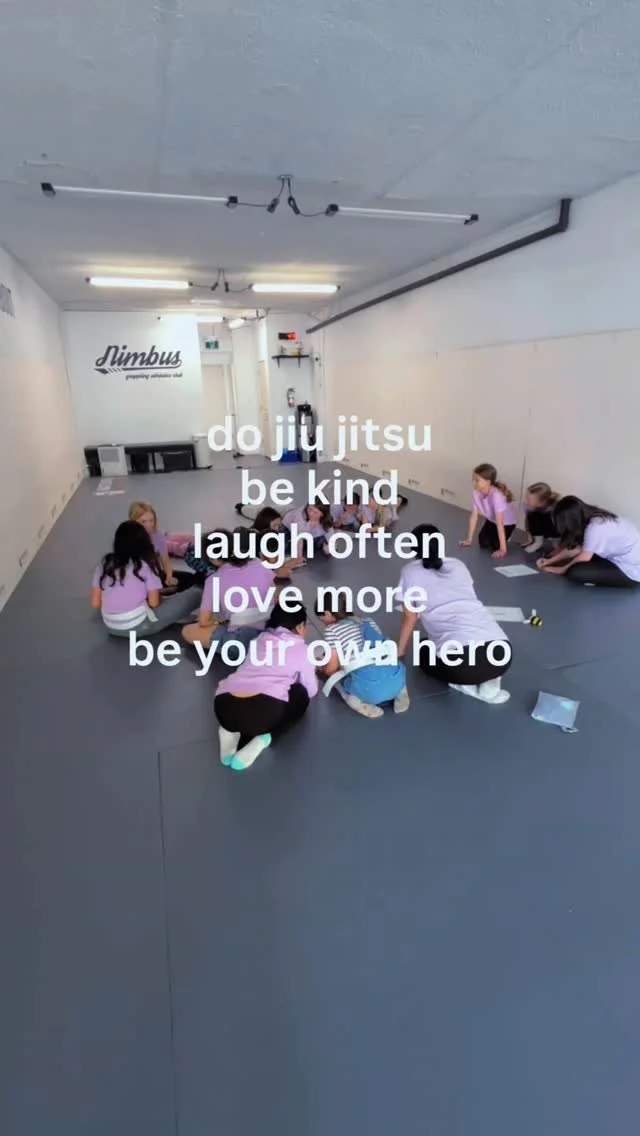
And honestly, optimal learning can include fun. Play, laughter, and low-stakes practice help students stay engaged, build confidence, and actually remember what they learned. They will want to come back and learn more.
There is research that suggests self-defense training can have therapeutic benefits for some people, but that isn’t the intention in most school, community, or workplace settings, and it shouldn’t be framed that way. We’re not therapists. Our job is to teach practical skills, offer choice, and build capacity in ways that respect nervous systems, boundaries, and context.
This is also why good safeguards matter.
Before teaching these topics, educators need clear plans: what students can do if they feel activated (pause, step out, choose an alternate task), what the boundaries are around disclosure (no one is required to share), and what support pathways are available if something is disclosed. That also means being transparent about limits of confidentiality and mandated reporting, so students aren’t surprised mid-conversation.
What does it look like?
Whether teaching in schools, community spaces, or workplace training, “pressure” can be designed as cognitive load, time limits, ambiguity, or the social discomfort of a realistic everyday scenario, not staged intimidation. No forced touch, or aggression, and always a choice to pass, opt out, or participate in a different format.
This is where I think self-defense education needs a reframe: not just harm reduction (the assault is already happening), but prevention (not getting into the fight in the first place), while still providing tools for both. We can’t safely recreate chaos, and pretending we can is both unrealistic and, in many settings, unethical. But we can practise the upstream capacities that make chaos less likely and expand a person’s options when something starts to go sideways: noticing early red flags, naming discomfort, setting a boundary, creating distance, and getting support sooner rather than later.
Assessment can follow the same logic. Instead of testing whether someone will “perform” in a worst-case scenario, we can assess whether they can make protective decisions in common, teachable situations. That might look like:
Short scenerios (vignettes) that involve everyday boundary pushes (peer pressure, unwanted jokes, coercive “friend” dynamics, online harassment)
A quick decision pathway prompt: “What would you do first? Then what?”
Varying-intensity role-plays, where learners can choose to speak, narrate, write, observe, or coach
Reflex development drills with increasing resistance to demonstrate physical techniques
A focus on function, not style: did they identify the issue, communicate a limit in some form, choose a safety-oriented next step, and know how to seek support?
If we keep the goal clear, it also helps with the criticism that “safe training trains people to fail.” Safe training doesn’t have to mean unrealistic training. It can mean progressive, consent-based practice: start with clarity, layer in mild time pressure, add complexity and ambiguity, and practise recovery and problem-solving, while keeping learners in charge of the intensity.
This also provides students with the opportunity to directly and explicitly communicate their comfort levels with their partner, adding to the layers of experiential learning by doing. What they learn to do in class with their partner, they will take into other areas of their life. Whether that is asking for space, a compromise, or an adjustment.
Because in a real situation, the win is rarely a perfect technique. It’s far more boring; it’s avoiding the fight in the first place. It’s staying safe and not getting hurt.
Where I land is this: the goal of self-defense isn’t to simulate worst-case violence. It’s to strengthen the skills that help students avoid it in the first place and respond earlier when something feels off, and feel more confident in their everyday lives. That means building judgement, boundary-setting, help-seeking, and exit strategies in common situations, without pretending we can safely replicate chaos. In other words, we can’t train for every violent scenario, but we can train the capacities that make violence less likely and give students more options when it matters.
Where does this leave us?
If we take empowerment self-defense seriously as prevention, then we have to stop treating its most meaningful outcomes as side effects. The work isn’t only in the wrist releases or the drills. It’s in the quieter shifts: noticing discomfort sooner, believing you’re allowed to respond, and choosing an option that moves you toward safety. Those changes can be subtle, but they’re not vague. They’re skill-based.
At the same time, we have to be honest about the constraints. We can’t ethically recreate chaos in a classroom or workplace just to “see what people would do.” We don’t know what learners have lived through or what they may be living through right now. Fear-based learning isn’t effective, and it can be harmful. A trauma-informed approach prioritizes choice, psychological safety, and consent, and it can still be practical, challenging, and even fun. In fact, play and low-stakes practice are often what help skills stick.
That’s why, for me, the best assessments focus on function, not performance. Not: did someone look confident, loud, or direct, though those are often good indicators and not to be discounted. But: did they recognize a boundary push, communicate a limit in some form, follow through with a safety-oriented next step, and know how to access support?
If schools want students to develop self-agency, they’ll need to make room for students to practise it. That means valuing “appropriate rebellion” when something is wrong, harmful, or unsafe, not just rewarding compliance because it’s easier to manage.
Maybe the question isn’t whether ESD “works” in some dramatic, transformative way. Maybe the question is whether it gives people more options, earlier, and whether those funding this training are willing to see those quiet moments as real evidence of learning.
For me, the takeaway is this: the hidden curriculum in empowerment self-defense is too important to leave in the realm of vibes. But the moment we formalize it, we also have to protect it. The best version of assessment doesn’t try to quantify someone’s worth or bravery. It looks for practical evidence of agency in messy, realistic situations, with enough flexibility to respect culture, context, and safety realities. If we claim empowerment as an outcome, we should be willing to define it clearly enough that it can be taught on purpose, not by accident.