What is Empowerment Self-Defense?
Empowerment Self Defense (ESD) is a research-backed, holistic approach to personal safety that provides participants with tools to address the whole spectrum of violence — from everyday boundary-testing and verbal harassment to sexual and physical violence.
That spectrum can include subtle behaviours like inappropriate comments, pressure, intimidation, exclusion, or power plays, as well as more overt threats to safety. ESD is a violence prevention system that teaches individuals how to interrupt harm early by listening to their intuition, assessing their options, asserting boundaries, and using de-escalation strategies.
In practice, this can look like noticing early “off” feelings, using a simple boundary phrase, creating space, getting support sooner, and only using physical skills when needed. The goal isn’t to win a fight. It’s to increase your options and get to safety.
The Five Core Principles of ESD
ESD is often taught through five core principles: Think, Yell, Run, Fight, and Tell.

Think is about awareness: noticing what’s happening around you and inside you, trusting your gut, and assessing your options.
Yell is about using your voice — not just volume, but clarity. It’s the ability to set a boundary, interrupt behaviour, or call attention when needed.
Run reminds us that distance is often the safest option. If you can leave, leave.
Fight is a last resort. It’s simple, effective physical skills used only if necessary to create an opportunity to escape.
Tell emphasizes support. Sometimes telling means formal reporting to a teacher, supervisor, HR, or another authority figure — and that takes real courage. But telling can also mean naming what happened to someone you trust so you’re not carrying it alone and can think clearly about next steps.
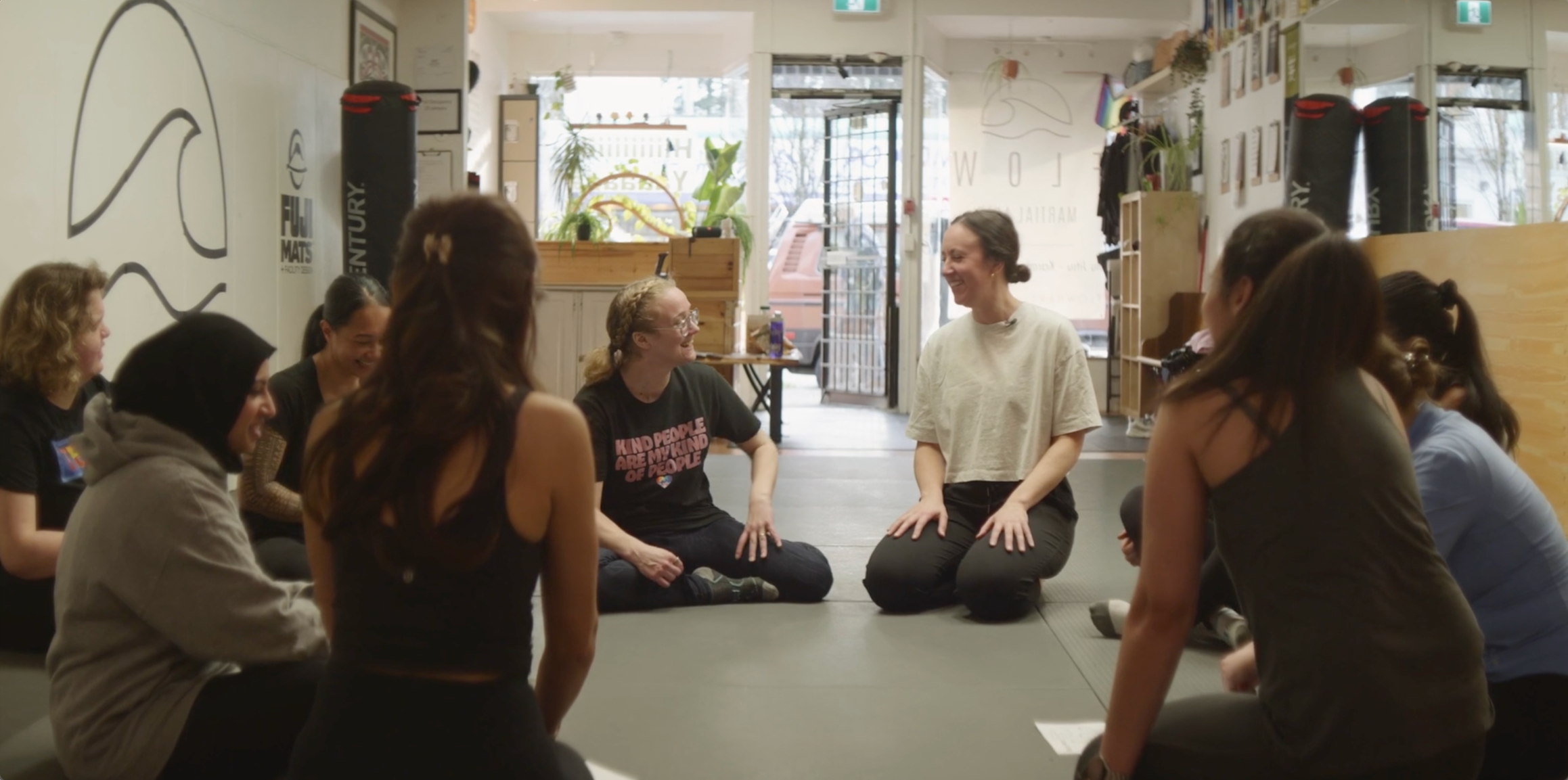
At Arise, we teach these principles through scenario-based practice, nervous system regulation tools, and simple movement skills that work for different bodies, abilities, and comfort levels.
Why ESD Matters
ESD matters because harm rarely starts with physical violence. Most of the time, it starts earlier — with discomfort, boundary-testing, coercion, pressure, disrespect, or subtle power dynamics that make people feel unsafe or small.
ESD gives people language and practice for those “in-between” moments — the ones that are easy to dismiss, minimize, or rationalize, even when your body is saying, “Something isn’t right.”
And it helps people build something even deeper than technique: self-trust.
Why It Matters in Schools for Children and Teens

Schools are one of the most important places to teach ESD because they are a central environment where young people learn how relationships work. During these formative years, habits are built and beliefs about worth, consent, boundaries, and voice take shape.
When ESD is taught in schools, students learn to recognize early warning signs, trust their instincts, and practice assertive communication. They learn that boundaries aren’t “mean” — they’re healthy. They learn how to speak up, how to seek support, and how to navigate peer pressure and social dynamics with more confidence.
This doesn’t just support individual safety. It helps build a culture of respect. When students share common language around consent and boundaries, the entire community becomes stronger and more connected.
And those skills don’t stay in the classroom. They carry forward into adulthood.
Why It Matters in Workplaces for Adults

The same skills that help students navigate peer dynamics are the skills adults need in professional environments.
Workplaces often involve hierarchy, performance expectations, and power dynamics that make it difficult to speak up when something feels off. Boundary-testing can show up as being talked over, inappropriate humour, dismissive comments, unrealistic workload expectations, intimidation, harassment, or the quiet erosion of psychological safety.
ESD helps employees, managers, and leaders recognize these patterns early and respond with more clarity and confidence. It offers grounded tools for de-escalation, boundary-setting, and decision-making under stress. And it supports people in knowing when to ask for help, document concerns, or report incidents appropriately.
Because people spend so much of their day and energy at work, feeling safe and respected there isn’t a “nice to have.” It’s fundamental to wellbeing — and to healthy workplace culture.
The Bigger Picture
Empowerment Self-Defense is more than a set of techniques. It’s a prevention-based approach to building safer, more respectful communities — one person, one classroom, and one workplace at a time.
At every age and stage of life, ESD reinforces an essential message: You deserve safety, respect, and the tools to advocate for yourself.
Want to Go Deeper?
📥 Download our free A–Z of Self-Defense Toolkit
It’s packed with reflection prompts, practical tips, and confidence boosters to help you feel stronger — in your body, your voice, and your choices.
Or join an upcoming class, workshop, or workplace training — where we teach verbal strategies, physical skills, and trauma-informed tools to feel safe, speak clearly, and stand tall.