I was minding my own business looking at some pans on sale at the grocery store when a man appeared beside me. Maybe you’ve had a similar experience. It started out fine, a comment about the deal in front of us.
“Oh right, yeah,” I said with a shrug, not really wanting to engage.
“They never put the good ones on sale though,” he said, stepping a little closer. “You a good cook?”
“Not really.” I put the pan back and turned toward the cart.
“Come on, I bet you are. You look like you know your way around a kitchen.” He laughed. I laughed too, the polite little laugh I’ve been doing my whole life, and immediately hated it.
He picked up the pan I’d just put down. “You should get this one. I’ll show you how to season it. What are you doing after this?”
And there it was. That moment where your body knows before your brain does. My shoulders went up, my face kept smiling, and somewhere in my head, a voice said: Don’t be rude. He’s just being friendly.
“I’m good, thanks,” I said.
He tilted his head. “You have a boyfriend or something?”
“Yes,” I said. I didn’t. Not at the time.
“Ah, okay. Lucky guy.” He put the pan down and walked away.
Just like that. I stood there holding my cart, heart pounding, over a frying pan.
My no didn’t end that conversation. A man who didn’t exist did.
Most women I teach already know how to say no. We’ve been practising the soft version our whole lives with a “sorry,” an excuse, a smile that says please don’t make this weird. What most of us were never taught is the second no. Or the third. Or what to do when someone keeps going.
So we freeze, or we laugh it off, or we reach for an excuse, or we give in a little just to make it end.
By the end of this post, you’ll have a plan for every step after that first no, so you never have to make it up on the spot.
Why this matters
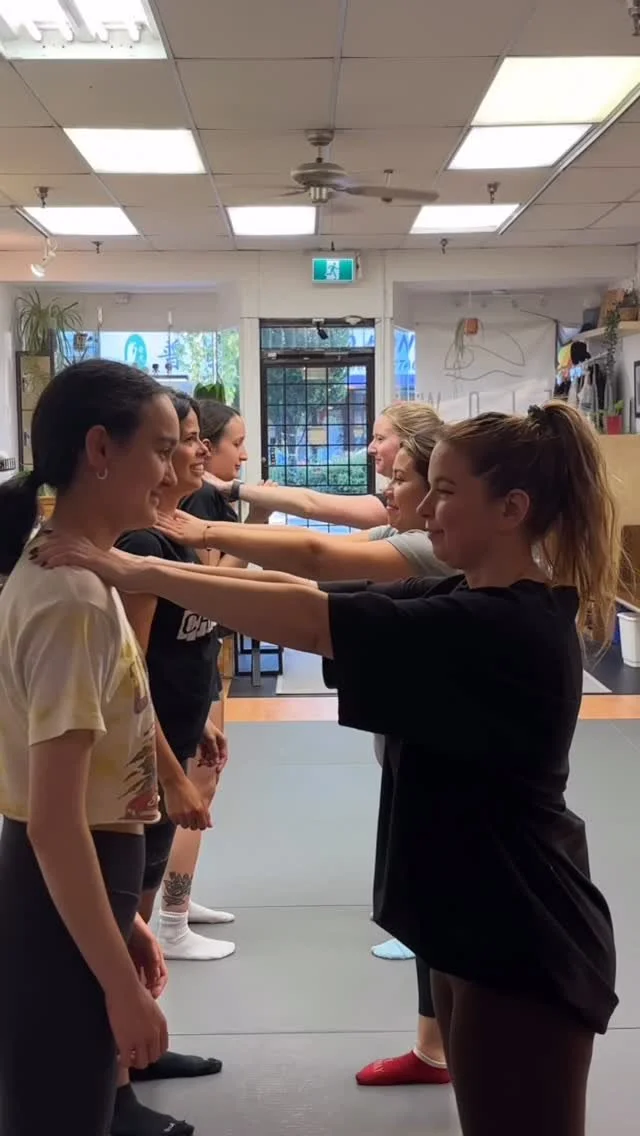
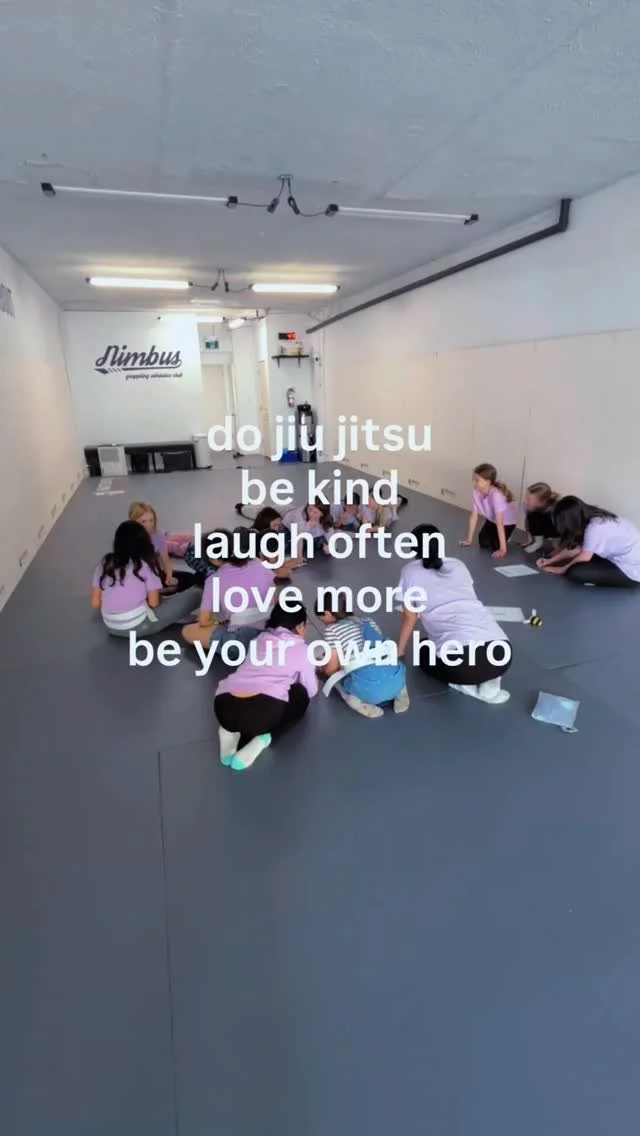
I’ve spent 15 years as an educator, 10 years training BJJ, and six years teaching women’s self-defense classes here in Vancouver, Canada. The single most useful thing I teach usually comes before any physical technique: what you say, and how firmly you say it.
The research backs this up. Empowerment self-defense programs that teach verbal and physical boundary-setting have cut sexual assault rates by close to half in controlled studies. [Senn et al., 2015, New England Journal of Medicine].
Here’s why. People who cross big lines usually test small ones first. They ask again after you said no. They stand a little too close. They touch your arm and watch what you do. How you respond to the small test tells them a lot about whether to keep going.
I want to be honest with you, though: there are no guarantees in violence prevention. Violence is messy, and power dynamics are real. But having options beats freezing, and it beats believing it’ll never happen to you.
The Boundary Ladder
A boundary works best as a sequence, one that gets firmer each time someone ignores it. Picture a ladder. Each rung is a little louder, a little clearer, and asks a little less permission than the one before.
A quick note before we start. Talking to strangers is part of life, and plenty of those conversations are lovely. The chat in line at the coffee shop, the person at the bus stop who comments on the weather, the neighbour who stops to pet your dog. You don’t need a ladder for any of that.
This is for the moments when something feels off, even if you can’t name it yet. You can usually feel the difference. A friendly stranger keeps a comfortable distance, reads your cues, and lets the conversation end when you’re done. Someone testing your boundaries moves a little too close, asks a little too much, and doesn’t seem to notice, or care, that you’re trying to wrap it up.
Your discomfort is enough of a reason. You don’t need to figure out why before you’re allowed to respond.
Back to the ladder. Here are the five rungs:
Polite No
Clear No
Name It
Command
Leave or Get Loud
You don’t have to climb every rung every time. Most situations end at Rung 1 or 2. But knowing the whole ladder exists changes how you stand on the first step.
Since every situation is different, here are some things to ask yourself:
What might this person want, and how would I know?
What indicators are making me uncomfortable?
Can I de-escalate here, or do I risk escalating?
What do I gain and what do I risk with each choice?
There’s no single right answer. You get to decide, and you get to change your mind.
Rung 1: Polite No
This is the one you already know. It’s friendly, short, and gives the other person an easy way to back off.
“No thanks, I’m good.”
A lot of women come to class ready to throw politeness out the window. We’ve been too nice for too long, so the answer must be to stop being nice, right?
Not so fast. Politeness is a strategy too. A calm, friendly no can de-escalate. It lets the other person save face and walk away without feeling embarrassed or challenged, and for a lot of people, that’s all they need to let it go. Going hard right away can sometimes do the opposite and turn an awkward moment into a confrontation.
There’s another reason calm works: co-regulation. Our nervous systems pick up on each other. When you stay steady, with a relaxed face, an even voice, and a grounded stance, the other person’s body often settles a little too. And calm reads as confident. Assailants looking for an easy target tend to look for someone who seems unsure, distracted, or rattled. Someone who seems settled and aware gets passed over more often. In Grayson and Stein’s 1981 study, they found that inmates convicted of violent crimes picked out likely victims partly by how they walked.
Of course, this is easier said than done. When your heart is pounding and your face is hot, “just stay calm” is about as useful as being told to relax. That’s why we practise. Calm under pressure is a skill you can build, and you’ll find a plan for it below.
A few things make a polite no work better:
Keep it short. Every extra word is something they can respond to.
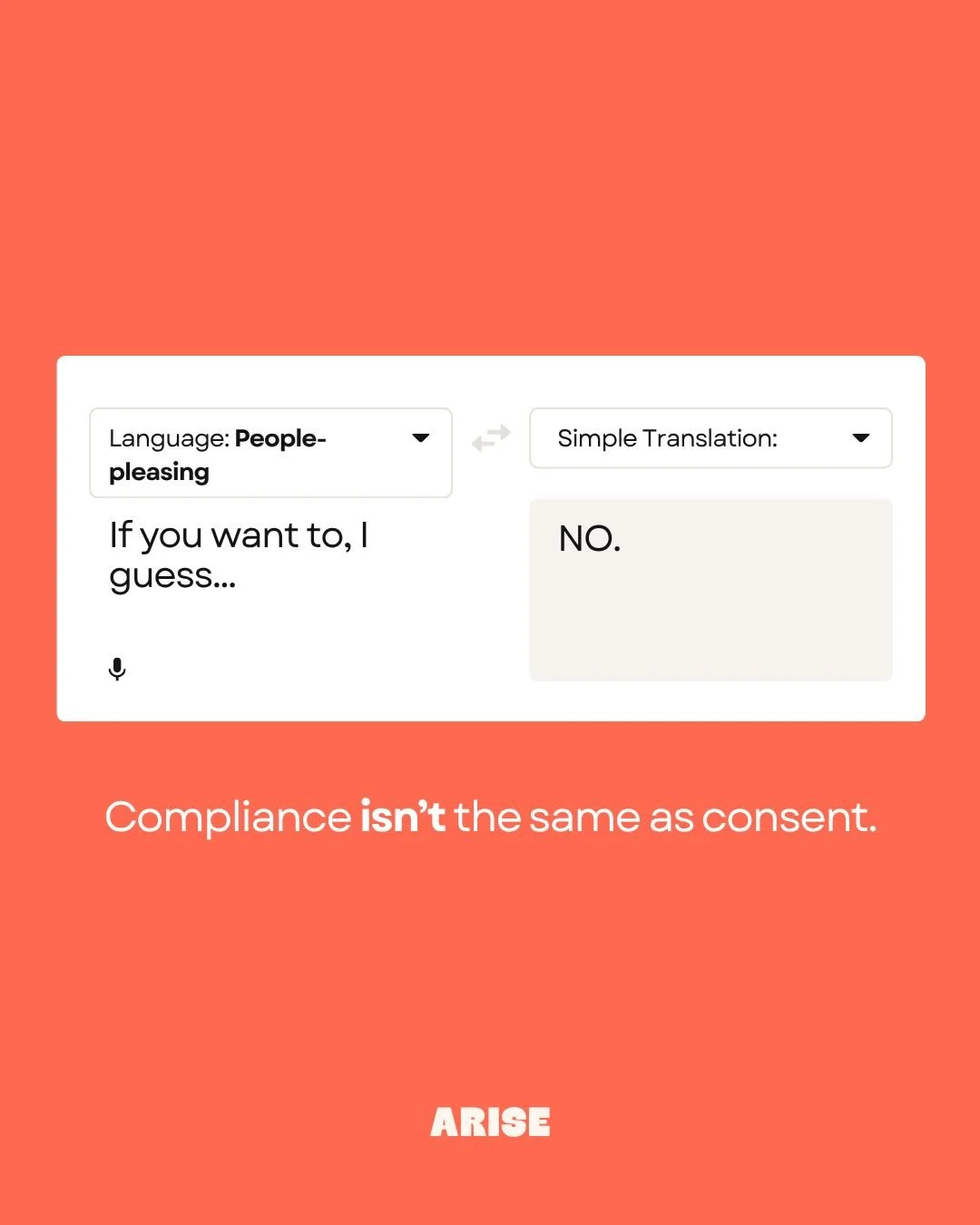
Skip the excuse. Remember the grocery store? The boyfriend line worked, and that’s exactly the problem. It told him my no only counted because another man had a claim on me. An excuse also gives them something to argue with: “He doesn’t have to know.” “Just as friends, then.” A plain “No thanks” stands on its own, and it keeps the boundary yours.
Smile if you want to. But notice if your smile is a nervous response or genuine.
Then watch what they do. Their response is the information you need. Do they leave? Apologize? Shrug and move on? Great, you’re done. Or do they ask again, step closer, get pushy, or turn on the charm? That’s your signal to move up the ladder.
Rung 1 homework: Write down three situations where you’ve said no with an excuse attached (“I have a boyfriend,” “I’m busy,” “I’m not feeling well”). Next to each, write the plain version: “No thanks, I’m good.” Notice how each one feels to read.
So how do you know when your polite no isn’t working?
Signs someone is testing your boundary
Before we climb, learn to spot the moment you need to. When someone does any of these after your first no, it’s time to go up a rung:
Ignoring. They act like you didn’t say anything. They ask again, or just keep going.
Negotiating. “Just one drink.” “Just five minutes.” “You have a boyfriend or something?” Your no has become the opening offer.
Sudden charm. They get extra friendly, extra complimentary. It feels nice and a little off at the same time.
Guilt or insult. “Wow, relax.” “I was just being nice.” “You think you’re too good for me?” This one is designed to make you apologize for your boundary.
Common manipulation tactics
Some boundary-testing is quieter. These tactics often show up before you’ve said no at all, and they work by making it feel harder to say. Gavin de Becker describes many of them in The Gift of Fear:
Forced teaming. Creating a sense of “we” that doesn’t exist. “They never put the good ones on sale, huh?” “We’re both stuck waiting.” It builds fast, false rapport so you feel rude pulling away.
Unsolicited help. Offering something you didn’t ask for. “I’ll show you how to season it.” “Let me carry that.” Now you feel like you owe them.
Typecasting. A small label you’ll want to prove wrong. “You seem uptight.” “You’re not one of those stuck-up girls, are you?” The easiest way to disprove it is to keep talking.
Too many details. A story with more detail than the situation needs. People telling the truth usually don’t over-explain. Extra detail is often there to make it sound believable.
The unsolicited promise. “I promise I’m not a creep.” “I won’t bother you, I swear.” A promise you didn’t ask for is a sign they know you have a reason to doubt them.
One of these on its own might mean nothing. People are awkward, and plenty of friendly strangers offer help. What matters is the pattern, and how they respond when you pull back.
Notice that none of these require someone to be scary. Most boundary-testers are pleasant. That’s what makes them hard to respond to.
A note on why we falter
So you’ve spotted the test. You know it’s time to go up a rung. And still, the words don’t come.
If that’s you, you’re in good company. Here’s what I hear in class, over and over:
“I didn’t want to make a scene.” Nobody wants to be the woman yelling in the cookware aisle.
“I didn’t want to be rude.” Or the word underneath it: the one women get called when they don’t smile back.
“What if he gets angry?” A real concern, and one worth taking seriously. Sometimes the polite option feels safer, and sometimes it is.
“Maybe I’m overreacting.” He’s probably harmless. He’s just friendly. You talk yourself out of what your body already knows.
“I have to see him again.” A coworker, a neighbour, your friend’s friend. The social cost feels bigger than the moment.
“I just froze.” Your brain went blank, and your mouth said “haha, yeah” all on its own.
Remember my polite little laugh in the grocery store? That was all of these at once.
None of this means you’re weak or doing it wrong. Most of us were taught that keeping other people comfortable is our job. Unlearning that takes more than knowing you’re allowed to say no. It takes having the words ready, and practising them until your body believes you.
Spotting the test is the first half. Knowing what to say next is the second.
Rung 2: Clear No
Drop the softeners. No “sorry,” no “I think,” no reason.
What you say:
Work: “No. I don’t hug at work.”
Social: “No, I’m not giving you my number.”
Stranger: “No.”
What your body does:
Stop smiling. Neutral face.
Turn your body to face them directly.
Eye contact, steady, a beat longer than feels comfortable. If that’s too much, look at their forehead or the bridge of their nose.
Normal speaking volume, lower pitch. Drop the question-mark lilt at the end.
The broken record. If they push, repeat the same sentence. Word for word. Don’t add to it.
“No, I’m not giving you my number.”
“Come on, why not?”
“No, I’m not giving you my number.”
This feels strange the first time. Do it anyway. The moment you explain yourself, you’ve handed them something to argue with. “I’m busy” becomes “how about next week?” A repeated no gives them nothing to grab.
Rung 2 homework: Write down the softeners you reach for most: “sorry,” “I think,” “maybe,” “it’s just that.” Then pick one recent no you softened and rewrite it as a single clear sentence with none of them.
Rung 3: Name It
Now you describe out loud what they’re doing. This shifts attention from your no to their behaviour.
What you say:
Work: “I’ve told you twice I don’t want a hug. Please stop asking.”
Social: “I’ve already said no. You keep asking.”
Stranger: “You’re standing too close. Step back.”
What your body does:
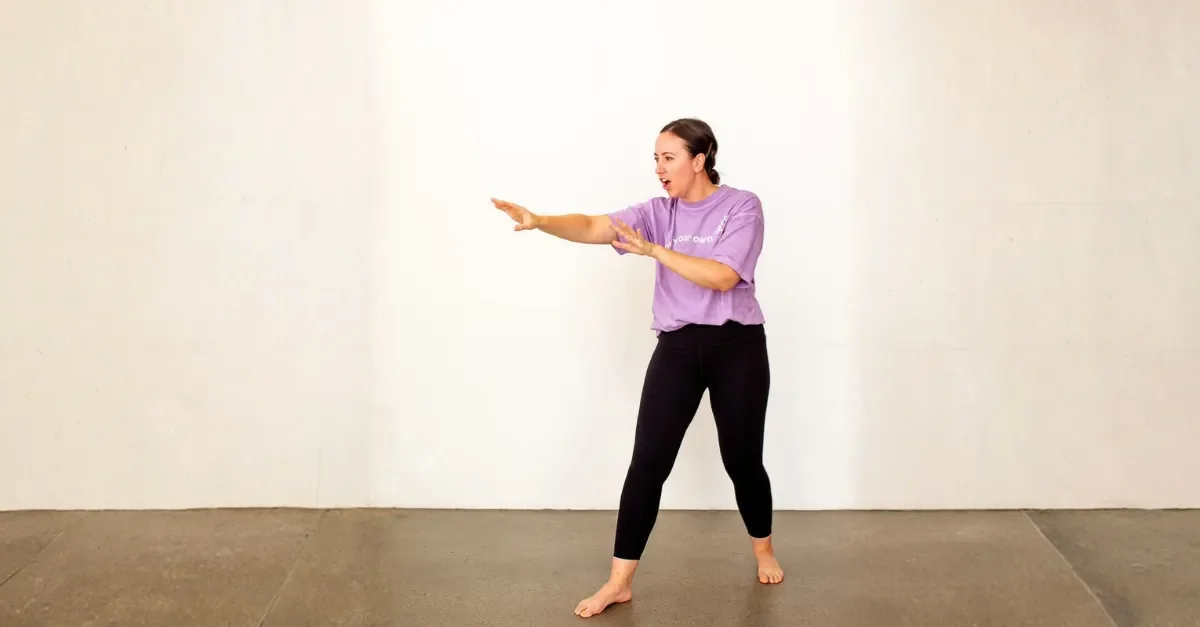
Hands come up to chest height, palms open, between you and them. We call this “the ready stance.” It looks calm and non-threatening, and it creates space while protecting your face and body. The open palm is also a universal sign for stop and signals to bystanders that you may be in distress or trying to de-escalate.
Get your base. Step one foot back, so you’re slightly angled with your weight balanced. You’re stable and ready to move.
Voice gets a little louder and slower.
Naming it does something else too: if anyone is nearby, they now know what’s happening. You’ve gone from a private awkward moment to a public one. Boundary-testers generally don’t like an audience.
Rung 3 homework: Think of a time someone kept pushing after your no. Write what they did in one plain sentence, as if you were saying it to them: “You’ve asked me three times.” “You’re standing too close.” That’s your Rung 3 line for next time.
Rung 4: Command
Short. Loud. A direct instruction.
What you say:
Work: “Stop. Don’t touch me.”
Social: “Back off. Leave me alone.”
Stranger: “BACK UP.”
What your body does:
Ready stance stays up. Arms a little firmer, palms still open.
No fists. Fists look aggressive, which can escalate things and make it harder for bystanders to see who needs help.
Big voice, from your belly. Practise this one, because most of us have never yelled on purpose.
Eyes on them. Know where your exit is.
This is the rung where people-pleasers flinch the hardest. It can feel rude, dramatic, or over the top. Here’s a reframe I give my students: by the time you’re at Rung 4, they’ve ignored you three times. You’ve been more than polite. You’re allowed to be loud now. They’re making you uncomfortable. It’s okay to make them uncomfortable.
Try it: finding your big voice
Stand with your feet hip-width apart and one hand on your belly.
Breathe in through your nose and let your belly push your hand out. Shoulders stay down.
Breathe out with a sharp “HA!” and feel your belly pull in. That push is where your big voice comes from.
Do three more. Then swap “HA!” for “NO!”
Finish with your full command: “BACK UP!” Same breath, same push from the belly.
If it comes out high, squeaky, or from your throat, that’s normal. Take a deeper belly breath and drop the pitch. Your voice should feel low and solid, like it’s coming from your core.
Rung 4 homework: The A to Z command challenge. Write the alphabet down the side of a page, then write a short command for each letter. Keep each one under five words. A few to get you started:
A: “Away from me!”
B: “Back up!”
C: “Cut it out!”
D: “Don’t touch me!”
Stuck on Q or X? Skip them. The goal is to build a bank of words so you never run out. When you’re done, circle your top three and read them out loud using the big voice exercise.
Rung 5: Leave or Get Loud
At this point, the conversation is over. Your goal is distance and help.
Leave:
Walk toward people, light, and/or open space.
Into a store, onto the bus, back to your desk, over to your friends.
You don’t owe anyone a goodbye.
Get loud and get help:
Speak to specific people, not a crowd. “You in the blue jacket, this man is bothering me. Can you stand with me?”
Tell a staff member, bartender, driver, or manager exactly what’s happening.
At work: go to your supervisor or HR, and write down what happened while it’s fresh.
If someone grabs you or blocks your way, you’re past the verbal ladder and into physical options. That’s a whole post of its own, and it’s what we practise in our classes every week.
Rung 5 homework: Pick three places you go regularly (work, the gym, the grocery store). For each one, write down where the exits are and who you’d ask for help.
When to skip rungs
The ladder is a guide. You can jump straight to the top whenever your gut says so. Skip rungs when:
Someone touches you without permission
Someone blocks your exit or corners you
Your gut says something is wrong, even if you can’t explain why
They escalated fast, going from friendly to angry in a sentence
You’re somewhere isolated
Your instincts are information. You don’t need proof to leave.
Your 7-day practice plan
You won’t find words under stress that you’ve never said out loud. Practise when it’s easy so they’re there when it isn’t. Five minutes a day.
Day 1: Mirror. Say your Rung 1 and Rung 2 lines out loud. Watch your face. Practise saying no without smiling.
Day 2: Mirror. Add the ready stance. Practise Rung 3 lines with your hands up, palms open, and one foot back.
Day 3: The car. Windows up, nobody listening. Run through the big voice exercise, then practise your Rung 4 command. Yell “BACK UP” until it stops feeling silly. (It’ll take a few.)
Day 4: Broken record. Ask a friend or partner to push back on your no. Your only job is to repeat the same sentence. No explaining.
Day 5: Full ladder. Same friend. Have them ignore you at every rung while you climb from 1 to 4.
Day 6: Low-stakes real life. Say a clean no somewhere easy. Decline the receipt, the upsell, the survey. No “sorry.”
Day 7: Reflect. Which rung felt hardest? That’s the one to keep practising.
Your ladder card
Screenshot this, or set it as your lock screen:
1. Polite No: “No thanks, I’m good.”
2. Clear No: “No.” Repeat.
3. Name It: “I’ve said no. Step back.”
4. Command: “BACK UP.”
5. Leave or Get Loud: Go toward people. Ask someone specific for help.
The after-part: when the guilt shows up
Here’s something nobody warns you about. You hold your boundary, it works, you walk away, and then an hour later your brain starts up:
Was I too harsh? Maybe he was just being friendly. I made it so awkward.
This is the people-pleaser hangover, and it’s normal. You spent years being rewarded for being agreeable, so your nervous system reads a firm no as danger, even after it kept you safe.
When it shows up, try this:
Name it. “This is the guilt spiral. It doesn’t mean I did something wrong.”
Check the facts. How many times did you say no before you got firmer? Usually the answer is “more than enough.”
Ask the reversal question. If a friend told you this story, would you think she was too harsh? Or would you be proud of her?
Notice what you did. You found your words. You took up space. That’s the practice.
Every time you climb the ladder, the next time gets a little easier. And every girl or woman watching you do it learns she’s allowed to climb it too.
Arise Self-Defense offers empowerment self-defense programs for women and teens, kids, schools, and workplaces across Metro Vancouver. Our work begins long before any physical technique — with voice, boundaries, and the knowledge that safety starts with you.