6 Common Concerns for Parents of Preteens (and Why Be Your Own Hero is For You)
I received an email from a mum last week who said, "Yes, I'm worried about my daughter being attacked by a random stranger, but I'm also concerned she doesn't know how to say no to her friends. I'm worried she freezes when things get hard and that she won’t ask for help."
Then she added, "Is this even what self-defense classes teach?"
The short answer is not usually, but Be Your Own Hero does and this is what makes us unique. We’re not just a martial arts program, we’re so much more.
When parents ask me about Be Your Own Hero, they don't usually start with self-defense techniques. They start with the stuff that actually keeps them up at night:
"My daughter doesn't stand up for herself."
"She says yes when she means no."
"She doesn't know how to handle friendship drama."
"She freezes when things get hard."
"I don't know who she'd ask for help."
"Peer pressure is hitting and I'm not sure she can handle it."
What's happening for preteen girls:
A friend asks her to do something uncomfortable and she says yes because she doesn't want to be mean.
A relative insists on a hug when she doesn't want one, and she doesn't know how to refuse.
A peer pressures her, subtly at first ("Everyone's doing it"), then more direct.
She makes a mistake and falls apart instead of bouncing back.
She has friendship drama and doesn't know how to set a boundary without losing the friendship.
Something feels off, but she keeps it inside instead of asking for help.
She doesn't believe in herself even when she's actually capable.
These concerns are completely valid, and yet they're not what most kids programs address, they’re usually about building mini-fighters who’ll compete and win medals at jiu jitsu competitions. We don’t care about that.
What we believe kids need is knowing themselves, trusting their instincts, communicating clearly, setting boundaries, handling pressure, and knowing who to lean on. We say this time and time again, self-defense is more than techniques, it's decision-making, confidence, resilience, and community.
We've spent years listening to what parents worry about. And we've built Be Your Own Hero around those real concerns, not around worst-case scenarios, competition, or fear-based training. At Be Your Own Hero, your daughter learns the skills she actually needs for the real situations she'll actually face.
This post breaks down the 9 most common parent worries I hear and exactly what we teach to address them.
Scroll down for these 6 common parent concerns:
"My Daughter Doesn't Believe in Herself"
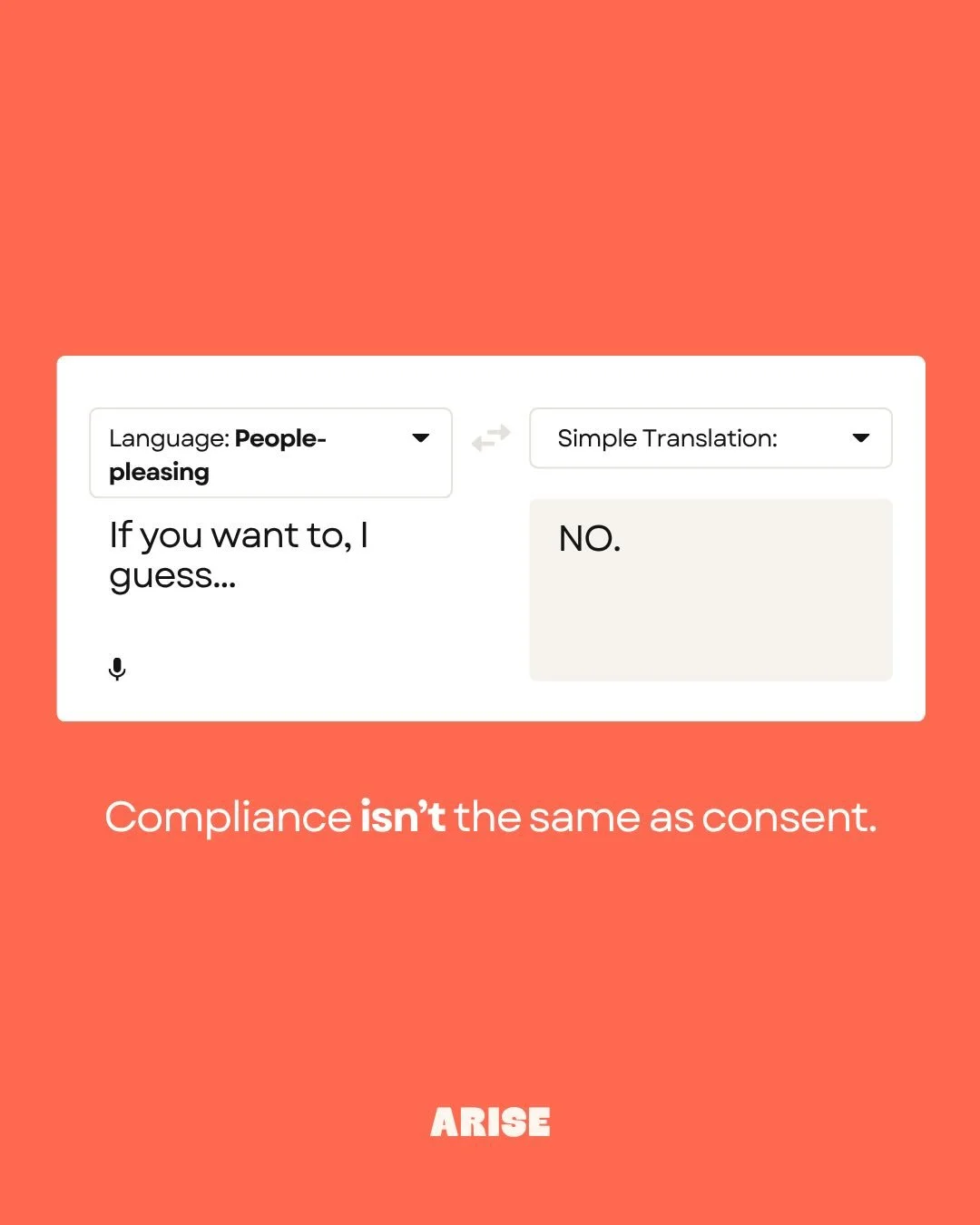
"She Says Yes When She Means No"
"She Doesn't Know How to Handle Friendship Drama"
"She Freezes When Things Get Hard (And She's Anxious About Everything)"
"I Don't Know Who She'll Ask for Help"
"Peer Pressure Is Hitting. I Don't Think She Knows How to Handle It."
#1: "My Daughter Doesn't Believe in Herself"
What you're seeing: She focuses on what she's bad at, not what she's good at. She doesn't try new things because she's convinced she'll fail. She doesn't think she's strong or capable.
Why it matters: Self-doubt becomes self-fulfilling. If she doesn't think she can do something, she won't try. If she doesn't believe she has options, she won't take them.
What we teach: Self-awareness isn't about being confident—it's about knowing yourself. In Week 1, we ask your daughter to name three things she's good at. Some kids name skills (I'm fast at running). Some name personality traits (I'm loyal). Some name random talents (I can do a handstand). There's no wrong answer. The point is: she spends 14 weeks noticing what she's already good at, not just what she's trying to build.
By the time she finishes BYOH, she's seen herself do hard things (breakfalls, escapes, practicing voice work over and over). She's seen herself make mistakes and keep going. She's gotten feedback from other kids and instructors about her specific strengths. Self-belief comes from evidence that you can do things, not from someone telling you to believe in yourself.
What shifts we see over time: Recognize her own strengths. Know that confidence is a skill that builds, not something you're born with. See herself as capable of learning hard things.
This is just the beginning. Self-awareness is the foundation, and it deepens with time. In future terms, she'll learn to trust those strengths more and more.
#2: "She Says Yes When She Means No"
What you're seeing: A friend asks her to do something uncomfortable and she agrees. A relative insists on a hug when she doesn't want one. A peer pressures her into something and she doesn't know how to refuse. Then afterward, she's mad at herself for not saying no.
Why it matters: This is how violations start—small at first, then bigger. And she's internalizing the message that her "no" doesn't matter. That what she wants doesn't matter.
What we teach: Saying no is a skill. It requires a clear voice, a body that backs up your words, and practice. In Weeks 4–5, we literally drill this. Your daughter practices saying "Stop" and "No" at different volumes. We use a phone volume meter so she gets real-time feedback. She does it until she finds a voice that sounds like her—not aggressive, not apologetic, just clear.
Then we teach her that her body language matters as much as her words. Standing big (shoulders back, feet hip-width apart, eye contact) sounds different than standing small (arms crossed, looking down). We practice both so she can feel the difference.
By Week 10, we go deeper: we teach the actual pressure tactics (guilt, minimizing, social proof, wearing down) and she practices responding to them. Not with a script—with actual response strategies: redirect, repeat your no, exit, or name what's happening.
What shifts we see over time: Say "Stop" and "No" with conviction. Understand that a clear boundary isn't mean—it's respect. Recognize when someone's using pressure on her. Have multiple ways to respond.
This is just the beginning. These skills will be tested in real life repeatedly. With each situation she navigates, her voice gets stronger and clearer. That's why continued practice—through multiple terms and real-world application—matters so much.
#3: "She Doesn't Know How to Handle Friendship Drama"
What you're seeing: A friend says something mean and she internalizes it. She doesn't know how to bring up something that bothered her. She blames herself for every conflict. She either avoids her friends or puts up with behavior that doesn't feel good.
Why it matters: Peer relationships are everything to this age group. If she can't navigate them with confidence, it affects everything—her mood, her school performance, her sense of safety.
What we teach: Boundaries are respect. Starting in Week 5, we teach what it means to have a boundary (it's personal and specific to you), how to recognize when someone's crossing one (it might feel uncomfortable, angry, small, or unsafe), and how to express it (using words + a body that backs it up).
Then we make it concrete. We give scenarios: A friend asks to borrow something and doesn't return it. A relative insists on a kiss goodbye when you don't want one. A classmate keeps interrupting you. Someone shares your secret.
For each scenario, your daughter learns: she can say no. She can set a limit. She can express how she feels without being mean. And she can still have the friendship.
In Week 11, we teach I-Statements so she has actual language: "I feel [emotion] when you [behaviour] because [reason], and I need [boundary]." Not a script—a formula that works for real situations.
What shifts we see over time: Know what boundaries are and why they matter. Be able to express a boundary without apologizing. Understand that limits can exist within friendships. Recognize when someone's violating a boundary and know how to respond.
This is just the beginning. Friendships are constantly evolving. She'll face new situations, new friend groups, new dynamics. The framework we teach becomes stronger each time she uses it. That's why students who continue with us through high school have such a different experience of friendship.
#4: "She Freezes When Things Get Hard (And She's Anxious About Everything)"
What you're seeing: She falls apart when she makes a mistake. She gives up on assignments because she's convinced she'll fail. She worries about everything. She's hesitant about trying new things because she's convinced something will go wrong. You're wondering if a self-defense class will make her anxiety worse—or actually help.
Why it matters: Life is going to be hard. If she falls apart every time there's difficulty, she's not building resilience—she's building avoidance. And anxiety thrives in avoidance. Resilience is the difference between "I can't do this" and "I can't do this yet."
What we teach: Resilience is a skill. And we literally teach it through falling.
In Week 7, we introduce breakfalls—a technique where you practice falling safely, landing with control, and getting back up. The first few times, it feels scary. By week 9, it's normal. By week 12, your daughter sees it as a skill. Here's the magic: when you teach falling as a skill, you change how kids see mistakes. Falling isn't failing. It's learning. Your body is practicing. You're getting back up.
We also teach growth mindset explicitly. We do an activity where your daughter writes down a negative thought she tells herself—"I always mess up" or "I can't do ground work"—and we practice reframing it: "I'm still figuring this out and that's okay."
Here's what parents of anxious kids notice: our instructors are trained in trauma-informed practices, which means we understand that anxiety is real and valid. We don't push kids to do things before they're ready. We create a safe space where your daughter can participate at her own pace. Week 1, she's nervous. By Week 5, she's trying techniques she was scared of. By Week 14, her relationship with discomfort has changed.
Why? Because she's done hard things—in a supportive environment, with people cheering her on, multiple times. That's how anxiety decreases. Not by avoiding hard things, but by doing them anyway and realizing you're okay. We also teach nervous-system tools: breathing, grounding, body awareness. These aren't framed as "anxiety management"—they're just part of the practice.
What shifts we see over time: See mistakes as information, not judgment. Bounce back faster when things get hard. Understand that struggle is part of learning. Feel more capable in her body. Have tools for managing anxiety that aren't avoidance. Know that nervousness and courage can exist at the same time. Trust that she can do hard things even when she's scared.
This is just the beginning. Anxiety doesn't disappear in 14 weeks—but your daughter's relationship with it shifts. She's learned that she can do hard things even when anxious. She's felt what courage actually feels like. In future terms, she'll face bigger challenges and keep building on this foundation. The nervous system rewires over time, with repetition and support. One term plants the seed. Continued practice grows the tree.
#5: "I Don't Know Who She'll Ask for Help"
What you're seeing: Your daughter tries to handle everything alone. She doesn't ask you for help. She doesn't go to teachers or coaches. If something is wrong, she keeps it inside and stews on it. You're worried that if she ever needs real help, she won't ask.
Why it matters: Asking for help is a sign of strength and wisdom—not weakness. And isolation is dangerous. She needs to know who's in her corner.
What we teach: Support networks aren't just a nice-to-have—they're part of staying safe.
In Week 11, we teach this directly. Your daughter maps her support network: who's in her immediate family, who are her close friends, who are teachers/coaches/mentors, who's in her community. Then we ask: who would you tell if something felt off with a friend? Who would you tell if something felt unsafe?
We practice asking for help through multiple activities: trust walks, circle of trust games, and explicit conversations about what asking for help looks like. We normalize it. We show her that people want to help.
We also teach the difference between different kinds of support. Some people are good for emotional support. Some are good for practical help. Some you tell about friendship drama. Some you tell about safety concerns. Having a map means she knows who to go to for what.
What shifts we see over time: Know who's in her support network. Understand different people are there for different things. Feel confident asking for help. Know who to tell when something feels off (friendship) vs. unsafe (safety).
This is just the beginning. As she gets older, her support network will expand. New people will enter her life. New challenges will require reaching out. The habit of asking for help that she starts here—that's what sticks. And it gets stronger every time she practices it.
#6: "Peer Pressure Is Hitting. I Don't Think She Knows How to Handle It."
What you're seeing: Friends are asking her to do things she's uncomfortable with. Pressure from classmates to fit in. Subtle stuff (social proof: "Everyone's doing it") and obvious stuff (guilt: "If you were a real friend...").
Why it matters: Peer pressure doesn't stop at 13. It evolves. But the skills to recognize and respond to it absolutely transfer.
What we teach: Pressure is normal. But it's recognizable, and there are strategies for responding to it.
In Week 10, we teach the actual tactics people use to pressure others: guilt, minimizing, social proof, and wearing down. Your daughter learns to recognize when someone's using these tactics. That recognition alone changes the game—instead of just feeling uncomfortable, she can name what's happening.
Then we teach response strategies—not scripts, but categories:
Redirect: "Let's do something else instead"
Repeat Your No: "Nope, not doing it" (broken record)
Exit: "I'm going to go now" (walk away)
Name It: "You're trying to pressure me and I don't like it"
We practice scenarios so she's thought through them in advance. When you've mentally rehearsed something, you're less likely to freeze when it actually happens.
We also teach that sometimes resisting is right, and sometimes strategic retreat is smart. Not every "no" needs a fight. Sometimes walking away is the power move.
What shifts we see over time: Recognize pressure tactics when they show up. Have multiple ways to respond. Understand that saying no is a choice she gets to make. Know when to push back and when to leave the situation.
This is just the beginning. Peer pressure evolves as she gets older. The tactics get more sophisticated. But the foundation she's built here—the ability to recognize them and respond—that's what protects her through middle school, high school, and beyond. This is why students often continue with us for multiple years.
The Common Thread
Every concern parents bring me comes down to the same thing: Does my daughter know she has options? Does she believe she can handle hard things? Does she know who to lean on?
BYOH teaches all three.
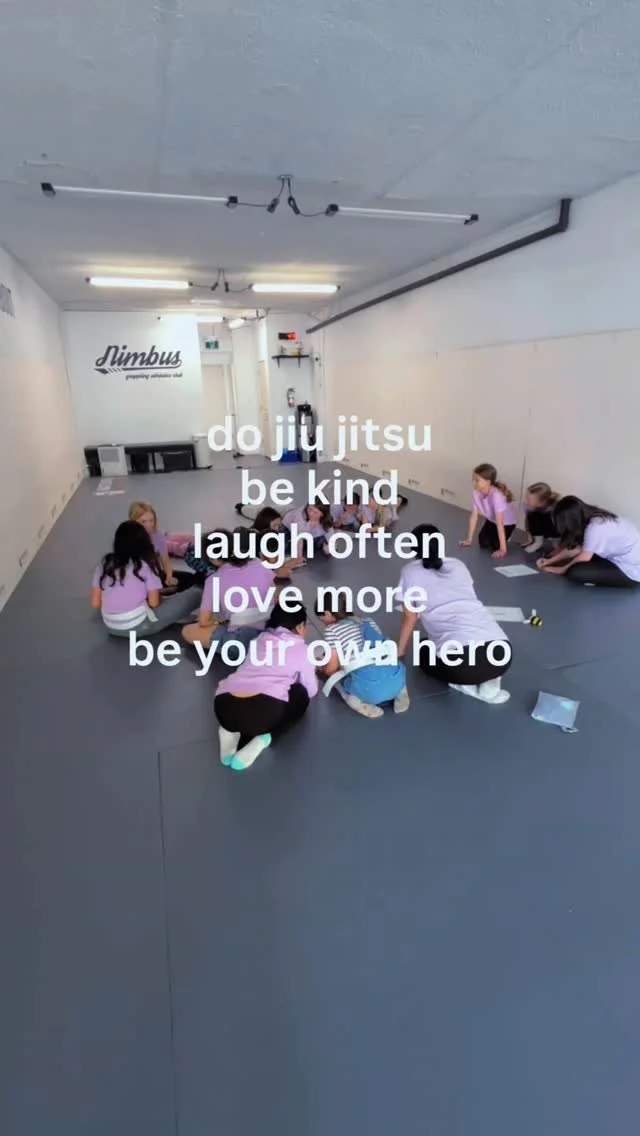
Over each term, through games, techniques, scenarios, conversations, and community, your daughter builds:
Self-awareness and confidence
Clear communication
Strong boundaries
Resilience when things get hard
The ability to recognize and respond to pressure
A support network she trusts
The belief that she has agency and options
The physical techniques are the vehicle, but the real magic is everything else.
Here's what's important to know: One term is just the beginning. These skills don't build in 10-14 weeks and then stop. Your daughter will start seeing real change during this program—in how she speaks up, sets boundaries, handles disappointment, but this is the foundation. Real confidence, resilience, and self-advocacy take time. They take repetition, and they take practice across multiple situations and even multiple years.
That's why many of our students continue with us—not because they need to, but because they want to keep building. Each term, they deepen the skills they learned before and add new layers. By the time they're 16, 17, 18, they're operating from a completely different place than where they started at 9 or 10. But it all began here.
What Parents Notice
"My daughter started setting boundaries with her friends and didn't lose the friendship."
"She bounces back from mistakes so much faster now."
"She asked ME for help instead of hiding it."
"I've never seen her this confident in her own body."
"She speaks up in class now. She used to never say anything."
"She actually handled peer pressure—she said no and didn't even second-guess herself."
"I was so worried the anxiety would make it hard for her. Instead, she's braver. Her whole relationship with scary things changed."
This is what many weeks of intentional teaching and practice looks like.
But here's the thing: These changes? They're just the beginning. One term plants the seeds. The real magic happens when your daughter keeps going—when she practices these skills across multiple situations, multiple friend groups, multiple years.
That's why many of our students continue beyond the first term. Not because they didn't learn enough, but because they realize how much deeper these skills can go. By year two, three, four—they're operating from a completely different place. But it all started here, in that first 10-14 weeks.
Ready to Start This Journey?
If your daughter is 9–13 and you want her to build real skills (not just confidence—but resilience, boundaries, communication, decision-making, and community), Be Your Own Hero is the beginning.
No experience needed. No special athletic ability. Just a willingness to learn, move, and grow—and a parent who understands that these skills take time to develop.
Take our Free Quiz to see if BYOH is the right fit, or register for a FREE trial class to see for yourself.
Fall term runs Sept 18 – Dec 18 (14 weeks, Fridays 4:30–5:45 pm).
This is just the beginning. Many of our students continue with us through multiple terms to deepen these skills and keep building.
Space is limited, and we typically fill up. Register here.
Questions? Reach out. We're here to help.
Arise Self-Defense offers empowerment self-defense programs for women and teens, kids, schools, and workplaces across Metro Vancouver. Our work begins long before any physical technique — with voice, boundaries, and the knowledge that safety starts with you.