It's Not Just Assault: Understanding the Full Spectrum of Sexual Violence
Most conversations about sexual violence start and end at assault. And while assault is serious and absolutely worth naming, focusing only on the most extreme end of the spectrum leaves a lot of harm unaddressed — and a lot of people without language for what they've experienced.
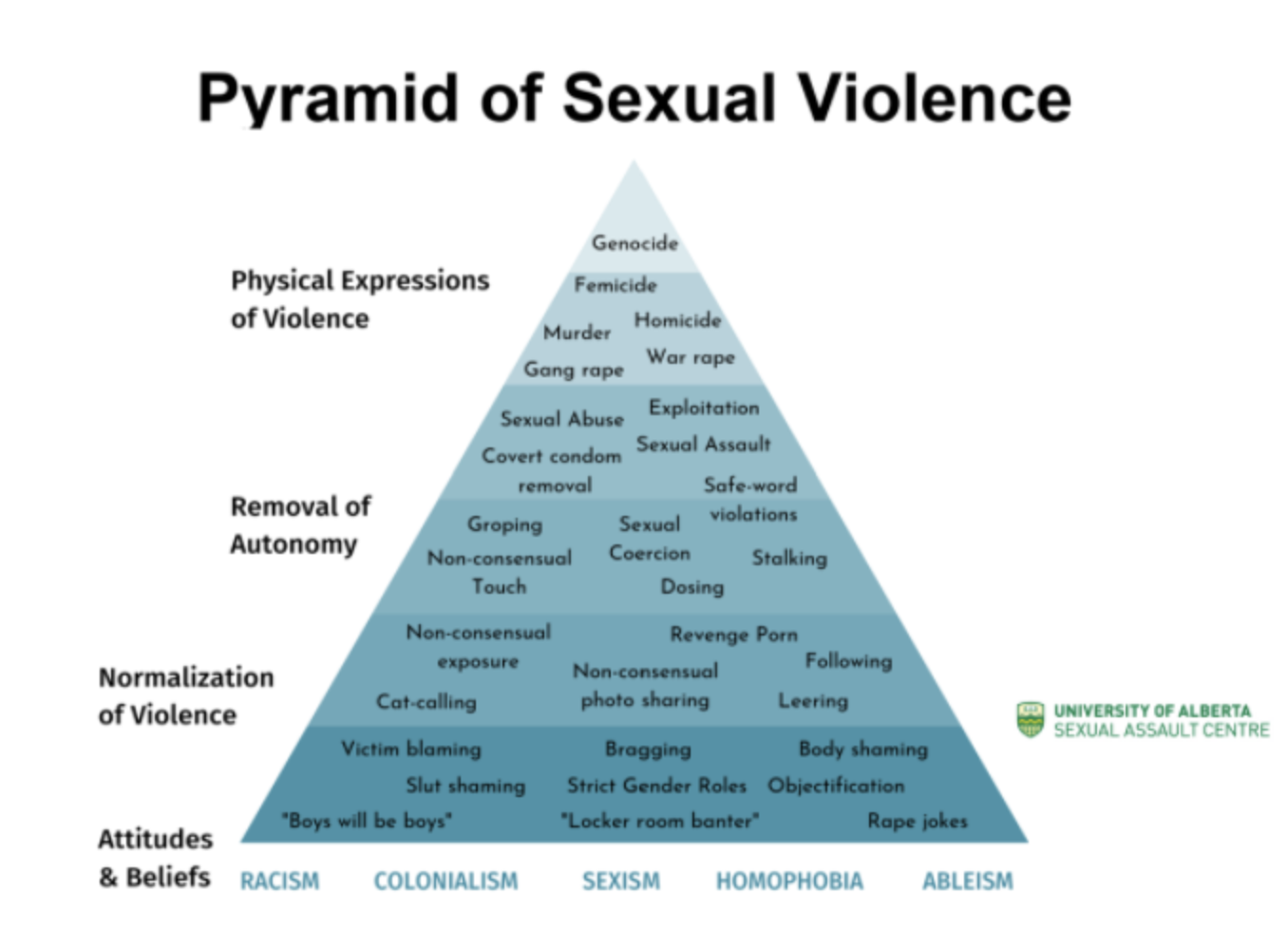
The reality is that sexual and gender-based violence exists on a continuum. It doesn't start with a criminal act. It starts much earlier — in comments, dynamics, and behaviours that get dismissed as minor, normal, or not worth making a fuss over. Understanding the full spectrum isn't about catastrophizing everyday interactions. It's about recognizing that harm has a pattern, and patterns can be interrupted.
The Government of Canada has developed one of the clearer frameworks for mapping this spectrum — and while it was built for a military context, the underlying logic applies everywhere: workplaces, schools, communities, and relationships.
Here's what it covers.

One End of the Spectrum: What Safety Actually Looks Like
Before naming what's harmful, it helps to get clear on what a safe environment actually looks like — because safety isn't just the absence of assault. It's something that gets actively built.
A safe and inclusive environment is one where people feel valued, respected, and psychologically safe. Where humour is genuinely well-intentioned and doesn't come at anyone's expense. Where compliments are professional and task-focused. Where physical space is respected. Where microaffirmations — small gestures of inclusion and recognition — are the norm rather than the exception.
This matters because safety is a culture, not just a policy. And culture is made up of thousands of small daily choices about how we treat the people around us.
The Middle of the Spectrum: Conduct Deficiencies
This is the territory that causes the most confusion — and the most harm that goes unaddressed.
Conduct deficiencies of a sexual nature are behaviours that fall short of criminal but are far from acceptable. They negatively impact individuals and organizational culture, and they are often the precursors to more serious harm. They include:
Sexualized language, jokes, and innuendo. Unwanted conversation or humour of a sexual nature in the workplace. Often dismissed as banter. Rarely experienced that way by the person on the receiving end.
Hypersexualizing others. Emphasizing someone's sexual appeal over their professional contributions — reducing a person to how they're perceived sexually rather than who they are.
Microaggressions. Indirect, often unintentional comments or actions that express prejudice. The "unintentional" part doesn't reduce the impact. People who experience microaggressions regularly know the cumulative weight of them.
Inappropriate gaze and physical proximity. How someone looks at you, and how close they stand, communicates a great deal about whether they see you as a person or an object. Prolonged staring, bodies angled too close — these are not neutral.
Unsolicited sexual messages or images. In person or online. The channel doesn't change the harm.
Pressure for sexual attention. This one sits close to the edge of criminal behaviour — and it's worth naming plainly. Persistent, unwanted pursuit is not flattery.
What connects all of these is that they're rarely treated with the seriousness they deserve. They get minimized, explained away, or absorbed silently by the person experiencing them. And in the meantime, they do real damage — to individuals, to trust, and to the culture of any space where they're tolerated.
The Far End: Criminal Acts
Criminal acts of a sexual nature under Canada's Criminal Code include sexual assault in all its forms, criminal harassment (stalking), voyeurism, indecent exposure, luring, sexual interference with a minor, sexual exploitation, and the non-consensual publication of intimate images.
These aren't rare edge cases. They occur in workplaces, schools, homes, and communities at rates that most people would find staggering — and, as we know, they are significantly underreported.
One reason they're underreported is that people often don't recognize what happened to them as criminal. When harmful behaviour has been normalized across a spectrum — when the microaggressions and the inappropriate jokes and the pressure went unaddressed — the line can feel blurry. Part of understanding the spectrum is understanding that assault doesn't come out of nowhere. It tends to follow a trail of smaller violations that were never named or interrupted.
The Thread That Runs Through All of It: Power
One of the most important concepts in this framework is power imbalance. A power imbalance between the people involved is a common feature in many cases of sexual harassment and assault — and it directly affects a person's ability to resist, name what's happening, or report it.
Power shows up in rank, in age, in gender, in employment status, in social capital. It shows up in who gets believed and who doesn't. It shows up in the calculation a person makes when they're deciding whether speaking up is worth what it will cost them.
This is why "just say no" or "just report it" fundamentally misses the point. The ability to speak up freely isn't equally available to everyone — and pretending otherwise puts the responsibility on the person with the least power in the situation.
Why the Spectrum Framework Matters for Prevention
Empowerment self-defense is built on the understanding that safety starts long before any physical threat. The same principle applies here.
If we only talk about sexual violence at the criminal end of the spectrum, we miss most of the opportunities for prevention. The microaggression that wasn't named. The joke that was laughed off. The colleague whose gaze made someone pull their chair back. The comment that got absorbed in silence.
Each of those moments is a point of intervention — for bystanders, for leaders, for anyone in a position to set the tone for a space. When people can name what's happening across the full spectrum, they can act earlier, more confidently, and more effectively.
That's not about policing every interaction. It's about understanding that harm has early warning signs — and that we all have more agency in responding to them than most of us have been taught.
What You Can Do With This
Whether you're a leader, an educator, a parent, or someone trying to make sense of your own experiences — the spectrum framework gives you language. And language is where everything starts.
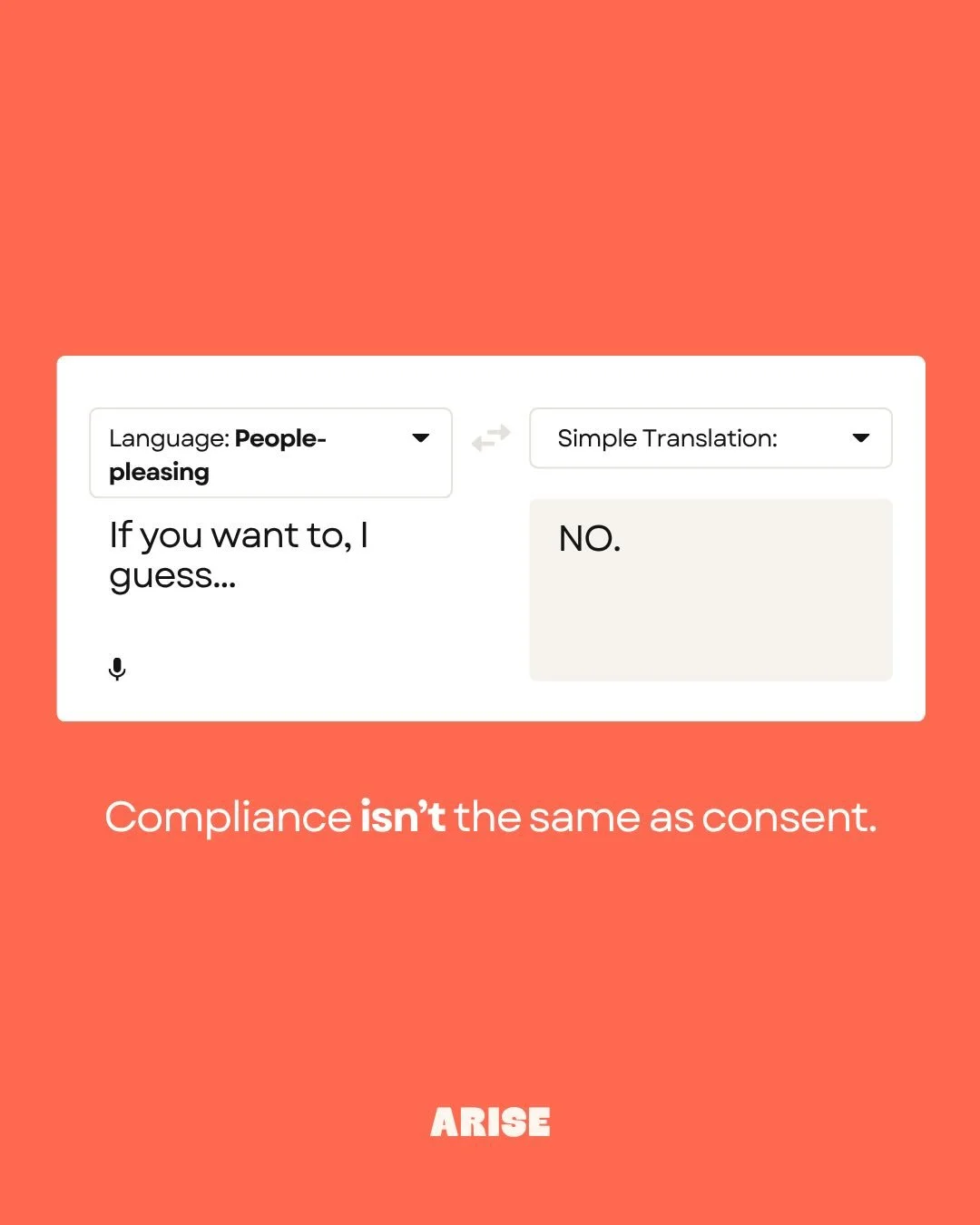
Name what's happening accurately. Don't minimize conduct deficiencies because they're "not as bad as" assault. Understand that consent is ongoing, active, and not determined by silence or compliance. Recognize that power shapes every interaction — and be honest about the power you hold.
And if you work with young people: this is exactly the kind of framework they need, early. Not to frighten them, but to give them the map.
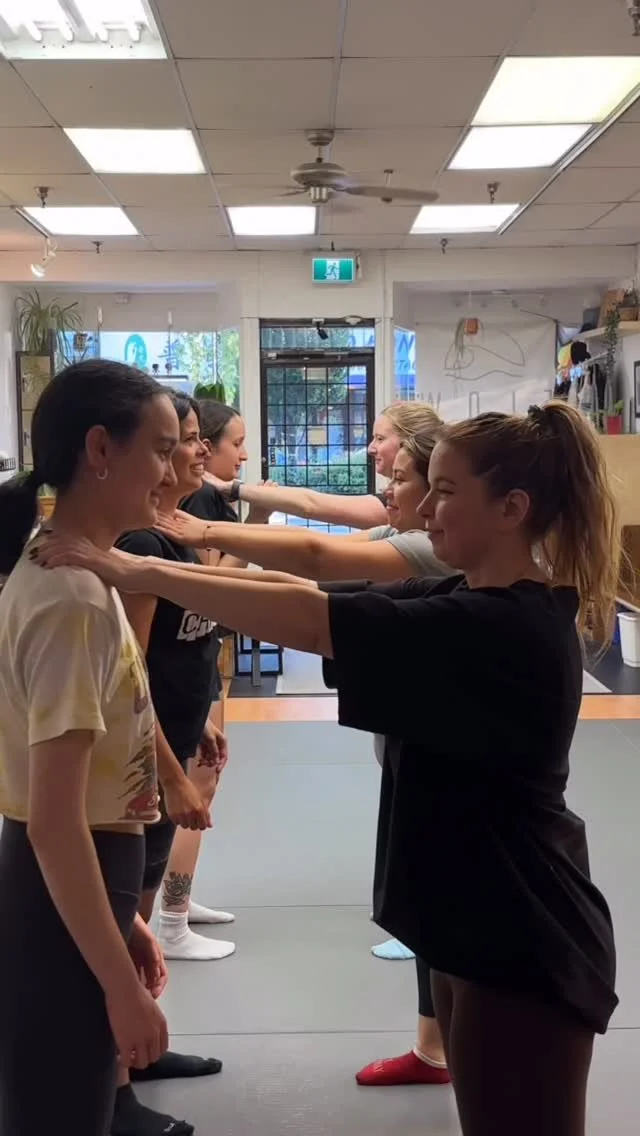
Arise Self-Defense offers empowerment self-defense programs for women and teens, kids, schools, and workplaces across Metro Vancouver. Our work begins long before any physical technique — with voice, boundaries, and the knowledge that safety starts with you.