Dismantling the Myth of Silence
Here's a question that gets asked after almost every assault, harassment incident, or abusive relationship comes to light: Why didn't she just say something?
It sounds like concern, but it isn't. It's a judgment dressed up as a question.
The assumption inside it — that speaking up is simple, obvious, and available to anyone who really wants to do it — is one of the most persistent and damaging myths in conversations about violence against women. And it's worth dismantling carefully, because until we do, we'll keep putting the responsibility for safety on the people least protected by our systems.

What We Know About Trauma and the Brain
When someone feels threatened, whether by a stranger, a partner, a colleague, or an authority figure, their nervous system takes over. We talk a lot about fight or flight, but those aren't the only two options the brain reaches for.
Freeze is just as common. The body goes still, speech becomes difficult or impossible, and time distorts. This is a physiological survival response, not a choice you’re making. Under acute threat, the amygdala drives a stress response that dials down the prefrontal cortex (the part of the brain responsible for rational thought and deliberate decision-making) making calm, calculated action genuinely hard to access.
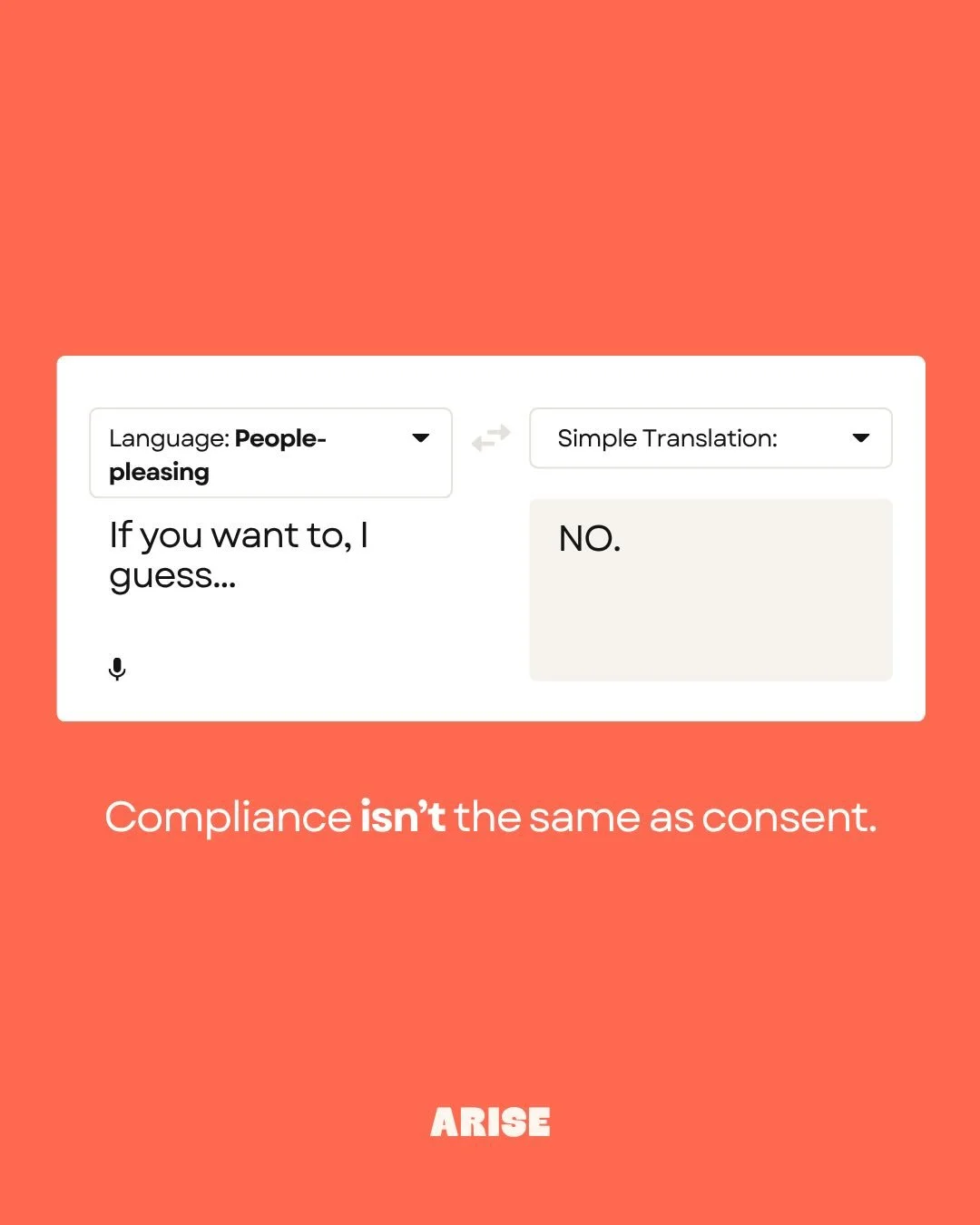
Fawn is less discussed but equally important. It's the response that looks like cooperation but is really the nervous system's attempt to reduce threat by appeasing, agreeing, or becoming invisible. A woman who laughs nervously at a harassing comment, says "it's okay" when it isn't, doesn’t uphold her important boundaries, or goes along with something she doesn't want — that's often fawn, not consent. Compliance is a survival strategy when options feel limited, and the thinking brain isn't fully online.
Knowing this is how our body naturally responds reframes the question entirely. Instead of why didn't she fight back? we can ask, what was actually available to her in that moment? That shift is the beginning of real understanding and empathy.
The Reporting Problem Isn't a Reporting Problem
Statistics on sexual assault reporting are grim and consistent. In Canada, only about 6% of sexual assaults are reported to police. Of those, roughly one-third result in charges, about half of those go to court, and fewer than half of completed cases end in a conviction.
Women know this. They're not unaware of their options — they've made a calculation, often rapidly, under enormous stress, and with very little reliable information about what outcomes are actually possible. The math doesn't add up in their favour.
Here's what that calculation actually involves:
Will I be believed? Credibility gets picked apart along predictable fault lines: Was she drinking? What was she wearing? Did she know him? Over 93% of survivors in one survey said they didn't expect the police would believe them, and 89% were influenced by watching how other survivors had been treated. If anything complicates a jury's picture of a "perfect victim," the chances of any meaningful outcome drop sharply.
What will it cost me? Reporting means revisiting the experience in detail — often multiple times, to multiple people, across a process that can take years. It can mean losing privacy, straining relationships, and becoming "the woman who reported," which carries its own social weight. Many women also don’t have an extensive safety network or support system to help carry the emotional weight of the process.
Who do I trust? For women from communities that have historically been failed, harmed, or criminalized by police — BIPOC women and LGBTQ2+ people — the institution of reporting carries real danger. Gendered racial stereotypes actively undermine the credibility of Black women survivors. For Indigenous women, the findings of the National Inquiry into Missing and Murdered Indigenous Women and Girls document, plainly, that severe violence often goes unreported because reporting to police has never been safe. Telling women to "just go to the police" without acknowledging that history can have very real consequences.
The decision not to report isn't irrational. In many cases, it's the most rational response to an irrational situation.
Why "Just Say No" Misses the Point
The barriers to speaking up aren't only institutional, they're relational and deeply social.
Most assaults and incidents of harassment are committed by someone the woman knows. A partner, a friend, a coworker, a family member. Naming what happened means naming that person. It means potentially blowing up a relationship, a workplace, a family system, or a social circle. The ripple effects can feel bigger than the incident itself, especially when she's been conditioned to manage everyone else's comfort before her own.
There's also the internalized piece: the voice that says maybe I'm overreacting, maybe it wasn't that bad, maybe I should have handled it differently. Victim blaming is so thoroughly baked into culture that many women do it to themselves before anyone else has the chance.
Self-doubt isn't weakness. It's what happens when you grow up in a world that consistently questions women's accounts of their own experiences.
What Empowerment Self-Defense Actually Addresses
This is where empowerment self-defense diverges sharply from traditional self-defense models.
The old model hands women a list of physical techniques and sends them out the door. Useful, sometimes, but it skips everything that happens before any technique is ever needed.
Empowerment self-defense addresses the earlier, harder stuff: Why is it so difficult to say stop or no or that's not okay? What's happening in the body when a threat shows up? How do we build the confidence to trust our own intuition in a situation and act on it before things escalate?
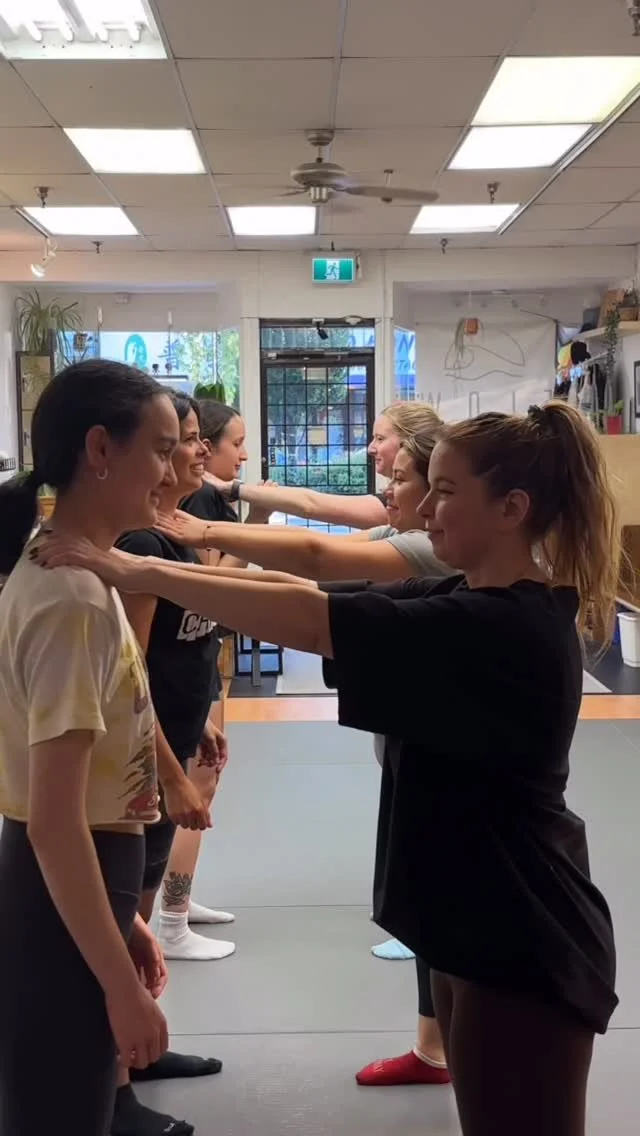
The Think, Yell, Run, Fight, Tell framework exists because self-defense starts long before anything physical. It starts with awareness. With permission to take your own discomfort seriously. With knowing that your voice is a tool, not a provocation.
That's not a soft alternative to "real" self-defense. It's the foundation without which any physical skill is incomplete.
What Actually Helps
If the goal is to support women in speaking up, reporting, and advocating for themselves — in class, at work, in relationships, on the street — the work isn't telling them to try harder or just be more confident.
It's building the conditions where speaking up is safer and more possible:
Education that starts early. Children who learn that their body is their own, that they have the right to name discomfort, and that adults will believe them are more likely to report harm and access support.
Trauma-informed response systems. Institutions — schools, workplaces, police services — that understand freeze and fawn responses will stop interpreting them as evidence that nothing happened.
Community accountability. When bystanders are equipped to intervene — not just video from the sidelines — the social cost of harassment goes up, and the isolation of the person targeted goes down.
Accountability without exception. Silence is easier to maintain when the person causing harm holds power. Systems that protect institutions and reputations over the people who've been harmed aren't neutral. They're a choice, and they tell every woman watching exactly how much her account is worth.
Changing what we reward. Right now, silence is often safer and easier than speaking. That's a design flaw in our culture, not a personal failing.
The Question Worth Asking Instead
We keep asking why she didn't speak up. But instead, we should be asking: what is making it so hard for her to do so?
Because the women who don't report aren't failing the system. The system is failing them — and has been, for a long time.
Understanding that isn't just more compassionate. It's more accurate. And it's the only starting point for building something better.
Arise Self-Defense offers empowerment self-defense programs for women and teens, kids, schools, and workplaces across Metro Vancouver. Our work begins long before any physical technique — with voice, boundaries, and the knowledge that safety starts with you.