The Body Knows First: Why Nervous System Regulation Is Self-Defense
You're walking home. Nothing is happening, it’s just an ordinary evening, part of your typical routine.
Then something shifts without warning. A feeling arrives before any thought can catch up. Your shoulders tense and your chest tightens. Your mind is still three steps behind, trying to catalog what feels wrong, but your body already knows.
This is where self-defense training should begin. Not in the moments of threat, when something went wrong a long time ago. But in the systems that determine whether you can access yourself before a threat appears, and avoid it in the first place.
Because your body—your nervous system—knows first. And it’s trying to tell you something.
In this post, we’re exploring nervous system regulation and what it means in the context of safety, understanding violence, and self-defense.

The Moment Before the Moment
Take a moment to think of a time recently when you felt genuinely calm. Maybe it was with someone you trust, or in a place that feels safe to you. Notice what that calm feels like in your body. Is your heart rate slow and steady, or are you aware of it at all? What's your temperature like, do you feel comfortable, warm, just right? Are your shoulders relaxed? Is your jaw loose or clenched?
When you're calm and regulated like this, notice what else becomes available to you: clarity. The ability to think through options. You can listen without defensive walls. You make better decisions, and you have access to your voice and instincts.
Now bring to mind a time you felt uncomfortable—not necessarily in danger, just uneasy. Maybe someone stood too close, or a conversation took a turn you didn't like. What shifted in your body? What did you notice happening?
Now think of a time you felt genuinely scared. Your body likely responded before your mind caught up. What do you remember about that moment? Your breath? Your thoughts? Whether or how you could move?
These different states—calm, uncomfortable, scared—are normal. We’ve all felt them. They're your nervous system doing exactly what it's designed to do: giving us information to act on.
But what most of us never learn is that understanding these states and learning to recognize them is essentially the foundation of maintaining your sense of safety; it’s a form of self-defense.
Most of us think self-defense happens in the moment of threat. We imagine the scenarios and easily picture ourselves acting decisively like Lara Croft or a badass ninja would. Having taken a few classes, you may be more aware of the options you have, and that can give a form of reassurance that helps you walk with more confidence, and less like an easy target.
However, training just for worst case scenarios is only one aspect of keeping oneself safe. Because by the time that moment arrives, the outcome is already being decided—not by what you know, but by what your nervous system is doing.
Your body is designed to keep you safe, with your nervous system acting as your body's built-in threat detection and response system. It's constantly scanning your environment by reading facial expressions, tone of voice, body language, and the energy in a room faster than your conscious mind can process.
Physiological Responses to Threat
Based on what it detects, your nervous system automatically shifts you into one of four survival states:
Fight: mobilize toward the threat
Flight: mobilize away from it
Freeze: go still and quiet, hoping to be overlooked
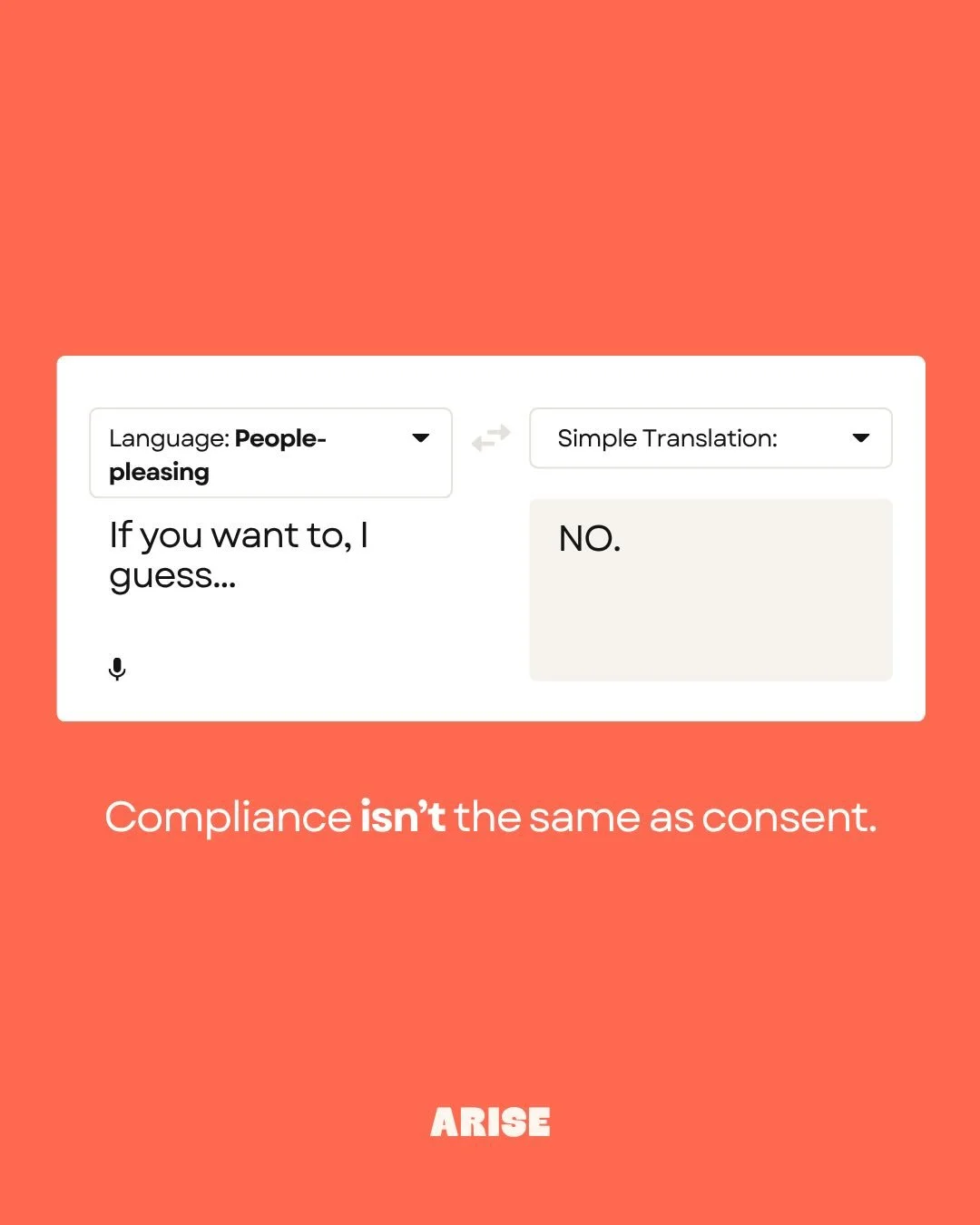
Fawn: appease and comply to reduce the threat
These aren't learned responses, they're hardwired survival mechanisms your body defaults to when it senses danger. They’ve kept humans alive for thousands of years.
The problem is that a dysregulated nervous system stays stuck reacting from these patterns even in ordinary, safe moments. When your nervous system detects a threat (real or perceived), your amygdala—the brain's alarm system—fires before your prefrontal cortex even registers what's happening. Adrenaline and cortisol flood your system and your thinking brain goes offline so you can survive (eg. run away, fight back, etc). The sophisticated decision-making part of you that could weigh options, assess the actual situation, and choose a response becomes inaccessible.
You're not choosing fight, flight, freeze, or fawn—your body is choosing for you, running on ancient survival wiring. So when a real threat arrives, you don't suddenly access calm clarity or new options. You just default to whatever state your system already runs—faster and more intensely.
That's why nervous system regulation is self-defense. A regulated nervous system can read danger more accurately, keep your thinking brain online, access your voice and options, and respond intentionally rather than reactively.
Understanding Your Nervous System's Language
This is why we created the Arise Nervous System Playbook—to give you that foundational recognition before anything else. It doesn't begin with technique or moves. Instead, it starts with understanding how your body functions under threat: Polyvagal Theory, the three branches of your autonomic nervous system, and the concept that you land in different "zones" when activation occurs. Once you understand this, every other tool you learn becomes exponentially more useful.
Green is where you're regulated and have access to your full self.
Yellow is where the threat response has kicked in but you still retain some agency and options.
Red is where your nervous system has gone into full shutdown mode, and choice becomes nearly impossible.
The point isn't to stay permanently in green—nobody actually does that, and it's not realistic to expect it. The real point is to recognize where you actually are in real time, and to have practiced ways to move back toward regulation.
When your nervous system is activated, your thinking brain stops working the same way it does in ordinary moments. Elaborate techniques require fine motor control and complex decision-making that simply don't happen when adrenaline has flooded your system.
So the Playbook shares practices that speak directly to the nervous system's needs: breath, repetition, simple physical cues, and the presence of another calm person nearby. These are things your body understands without needing your overthinking brain to translate.
What holds up under real stress is simple, well-rehearsed action, not complexity. The Playbook teaches you how to name your zone at the moment, because just recognizing where you are can shift you back toward green:
How to practice a controlled first move under adrenaline (scripting a simple phrase and saying it out loud, dozens of times, until your mouth knows how to do it even when your thinking brain has left the building).
How to assess the exits of every room you walk into, not as paranoia but as the kind of awareness that becomes reflex.
How to anchor a simple physical movement—stomping your foot, tapping your palm—to a cue word, so that under freeze, when words are impossible, your body can still move.
There's a phrase the Playbook introduces: co-regulation. One of the fastest ways to move your nervous system from activated back to calm is the presence of another person who is already calm. Not reassurance, which can feel hollow, but the physiological effect of being near someone whose nervous system isn't in overdrive.
This is why your safety network matters. This is why knowing who you can tell what happened is part of staying regulated. This is why belonging, solid people, people who believe you and don't minimize—these are self-defense too and why Tell is an important principle of Empowerment Self-Defense.
Your Options When It Matters
Like everything we do at Arise Self-Defense, the Playbook provides you options based on the five core principles of Empowerment Self-Defense:
Think — pause and assess before you decide anything
Yell — use your voice to set a boundary or draw attention
Run — get to safety by any means necessary
Fight — physical resistance as a last resort
Tell — report what happened to someone you trust
These aren't rigid steps you move through in order. They're options available to you at the moment. Which one fits depends entirely on the situation—but which one you actually use depends on whether your nervous system is regulated enough to have a choice at all.
This is why technique alone will never be enough. Whether your body is frozen, someone is restricting your movement, or panic has taken over, you need options beyond physical moves. The Playbook teaches you to recognize what's happening in your nervous system so you can access the full range of these five principles.
Why Early Recognition Changes Everything
You might wonder if violence rarely comes out of nowhere, why do so many people feel blindsided when it happens? The answer isn't that there were no warning signs. It's that you weren't trained to recognize them, or worse, you learned to ignore them.
Research on assault survivors is remarkably consistent: 80 to 90 percent report noticing something was off before the incident occurred. An uneasy feeling. Their nervous system knew something was wrong, but their conscious mind either didn't register it or talked them out of trusting it. We're taught to be polite, to give people the benefit of the doubt, to not be "paranoid."
So we override the body's wisdom in favour of social nicety.
Violence typically doesn't appear suddenly. It escalates. There's boundary testing—small violations to see how you'll respond. There's tone shifts, energy changes, behavioural escalation. With intimate partners, there's often a pattern of control and isolation before physical aggression emerges. With predatory behaviour, there's deliberate "grooming"—gradually pushing boundaries to assess whether you'll resist.
Even street violence usually has precursors: someone lingering too long, following you, watching you—cues your nervous system picks up through what neuroscientists call "neuroception," the body's ability to detect threat through sensory information faster than conscious thought.
This is exactly why nervous system regulation matters. When your nervous system is dysregulated—running on chronic stress, flooded with anxiety, trained to ignore its own signals—you can't trust the early warnings even when they're clear. You might feel uneasy but dismiss it as overthinking. You might notice a boundary violation but minimize it to avoid conflict. You might sense escalating aggression but freeze, hoping it will pass.
A regulated nervous system, by contrast, can notice the signal, trust it, and act on it while you still have the full range of options—before the situation ever escalates to physical danger.
This is prevention. This is the real power of what nervous system work offers.
Building Your Regulation Practice
This is the deep work the Nervous System Playbook holds. It's not a technique manual or a collection of moves. It's a map of how your own body actually works, and a collection of tools that speak directly to your nervous system's real language: regulation, recognition, and practice. It's built on the understanding that you're not broken for having these protective patterns—they kept you alive.
The goal is simply to expand your options, so that the next time your body tries to protect you, you have a choice in how it responds.
The Playbook gives you the framework and the practices. Your job is to start—not perfectly, not with the entire program, but simply by beginning to notice, one moment at a time, where your zone actually is. Practice these tools out loud and in low-stakes moments until your body remembers that you have options beyond your default pattern.
Five Things You Can Do Right Now
Notice your zone. Throughout the day, pause and ask yourself: Am I in green (calm, connected), yellow (activated but functional), or red (shut down)? Just the awareness itself begins the shift.
Practice one grounding technique daily. Choose one: belly breathing, feet flat on floor, naming five things you can see/touch/hear. Do it in ordinary moments so your nervous system knows how to access it when stress arrives.
Say no in a low-stakes moment this week. Practice in your car, to your reflection, or to someone you trust. Make the word familiar in your mouth before you need it to mean something critical.
Notice your physical patterns. Track which of the four responses (fight, flight, freeze, fawn) you default to under stress. Write it down. Recognition changes everything.
Identify one safe person. Having someone whose calm presence helps regulate your nervous system isn't a luxury—it's a biological necessity for getting back to green. Know who that person is.
Download the Arise Nervous System Playbook today for $7 and fill out the personal regulation plan at the end. Do this not as homework, but as an investment in yourself—in the person you already are, who simply needs practical tools to come back home to your own nervous system.
That's where real safety actually begins.
Arise Self-Defense offers empowerment self-defense programs for women and teens, kids, schools, and workplaces across Metro Vancouver. Our work begins long before any physical technique — with voice, boundaries, and the knowledge that safety starts with you.