Debunking the 5 Most Impactful Self-Defense Myths (+ 1 Bonus)
Most people walk into a self-defense class or real-life scenario with a picture in their head of who they're supposed to become: fearless and unshakeable. The kind of person who never freezes, never hesitates, never doubts herself in the moment it matters.
That picture is the problem.
It's not who you need to become. Chasing some future version of yourself is exactly what keeps so many women from ever starting. Because if the bar is "fearless," most of us disqualify ourselves before we walk in the door.
So let's clear out the six beliefs that do the most damage. Not because myth-busting is fun (although, a little), but because each one of these self-defense myths decides whether you engage with your own safety or opt out of it.

Myth #1: "Self-defense training makes you fearless"
It doesn't, and it shouldn't. Picture a woman on her first night of a beginner self-defense class, standing near the door, waiting to feel different and “fearless.” And when her heart is still pounding through a scenario drill in week three, she decides she's doing it wrong.
What she's feeling is her nervous system doing exactly what it evolved to do: scanning, flagging, and getting her ready to move. The goal is never to shut that system off, the goal is to learn how to use it to our advantage. Fear is information.
What changes over time and with practice is regulation, or the ability to feel your heart rate rising and still think, choose, and act efficiently.
Somewhere around week four or five, that usually clicks, and the work stops feeling like you’re becoming someone you’re not and starts feeling like you’ve got your own back.
Myth #2: "Violence always comes out of nowhere"
Gavin de Becker's The Gift of Fear tells us that 80 to 90% of survivors report noticing warning signs beforehand. When asked what they remembered from before it happened, a surprising number describe the same thing: a feeling they talked themselves out of, a gut check they dismissed as being dramatic, or a moment that felt off and got explained away because naming it out loud felt awkward or rude.
Violence usually isn't a lightning strike that comes out of nowhere.
More often, it’s a pattern, and patterns can be recognized. This means that self-defense isn’t just about surviving the unthinkable, but helps you learn to recognize and trust the signals and intuition you already have, the voices you've probably been talked out of more than once.
Myth #3: "The most important self-defense skill is a physical move"
This is the myth that keeps people from doing the work that changes the outcome. A woman can drill a wrist release forty times in a workshop and still freeze when someone grabs her for real. A technique only works if she can access it in the moment, and under real fear — shaking hands, racing heart — a move learned once months ago probably isn't the thing that shows up for her.
Her nervous system shows up first, so that's where training has to start.
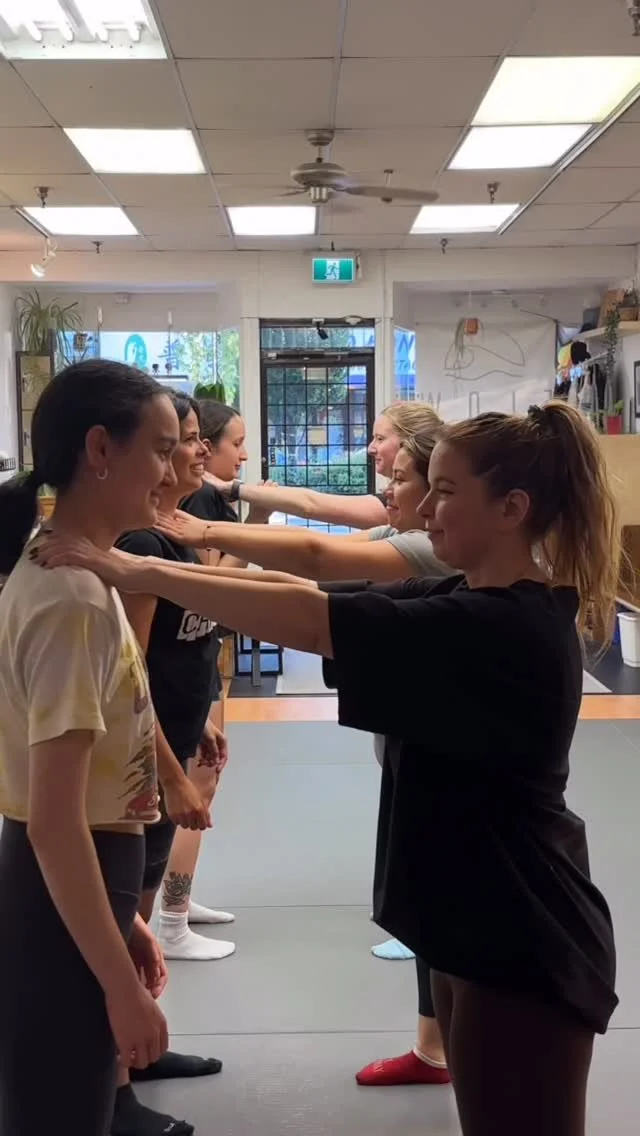
Every class begins in the body: breath, voice, the ability to stay present when everything in her wants to check out. Technique comes second, once that foundation is there.
This idea — that self-defense is more than physical techniques — is a key feature of all Arise classes and workshops, which are modeled around Empowerment Self-Defense principles.
Myth #4: "You need to be strong or athletic to defend yourself"
This myth has kept more women out of self-defense than almost any other belief on this list because it turns "am I capable" into "am I fit enough," and most people already have a complicated relationship with that question.
Strength helps, but it's not the main mechanism. Leverage, timing, positioning, and knowing exactly where to direct energy will do more for you than raw power ever will.
Trying to overpower someone who may be bigger, stronger, and with fewer morals is going to be challenging, which is why we prioritize avoiding these situations in the first place with holistic training.
Self-defense built well works for the body you have right now, not the body you'd need six months of strength training and cardio to build first.
Myth #5: "If you freeze, you've failed"
This self-defense myth often carries shame. A woman once shared that she'd spent years more ashamed of freezing during a threatening encounter than of anything the person who threatened her had done, convinced the freezing made her weak or complicit somehow.
Freeze is a survival response, wired in the same place as fight and flight, and for a lot of people it's the one that shows up first, especially if the body learned somewhere along the way that freezing kept it safer than fighting ever did. If you've frozen before — whether it was in a moment that scared you, in a relationship, or in a memory from long ago — that response was doing its job.
Saying that out loud, like we do during our discussions in Arise classes with a room full of women who've carried the same shame for years, tends to be one of the most relieving things that happens all class.
Bonus Myth: "You should fight back physically no matter what"
This one is potentially dangerous advice, because to commit to violence as a response will escalate things. And if you’re not willing or capable to see it through to the end and cause enough damage or destruction to get away, you may end up in a worse position. There are no winners in fights, even in organized MMA fights both opponents get injuries.
Context changes what's safe. Fighting back or physically resisting can be exactly right in one moment and exactly wrong in the next — running might be safer, freezing might protect you, and appeasement, de-escalating, buying time, going along with it until there's a way out, might be the smartest read of the room anyone in that situation could make.
There's no single correct response to danger, and any advice that pretends otherwise sets people up to feel like they failed no matter what they chose.
The real skill is having options, understanding what each one costs (plus your self-defense rights), and trusting yourself enough to choose in real time.
The Takeaways
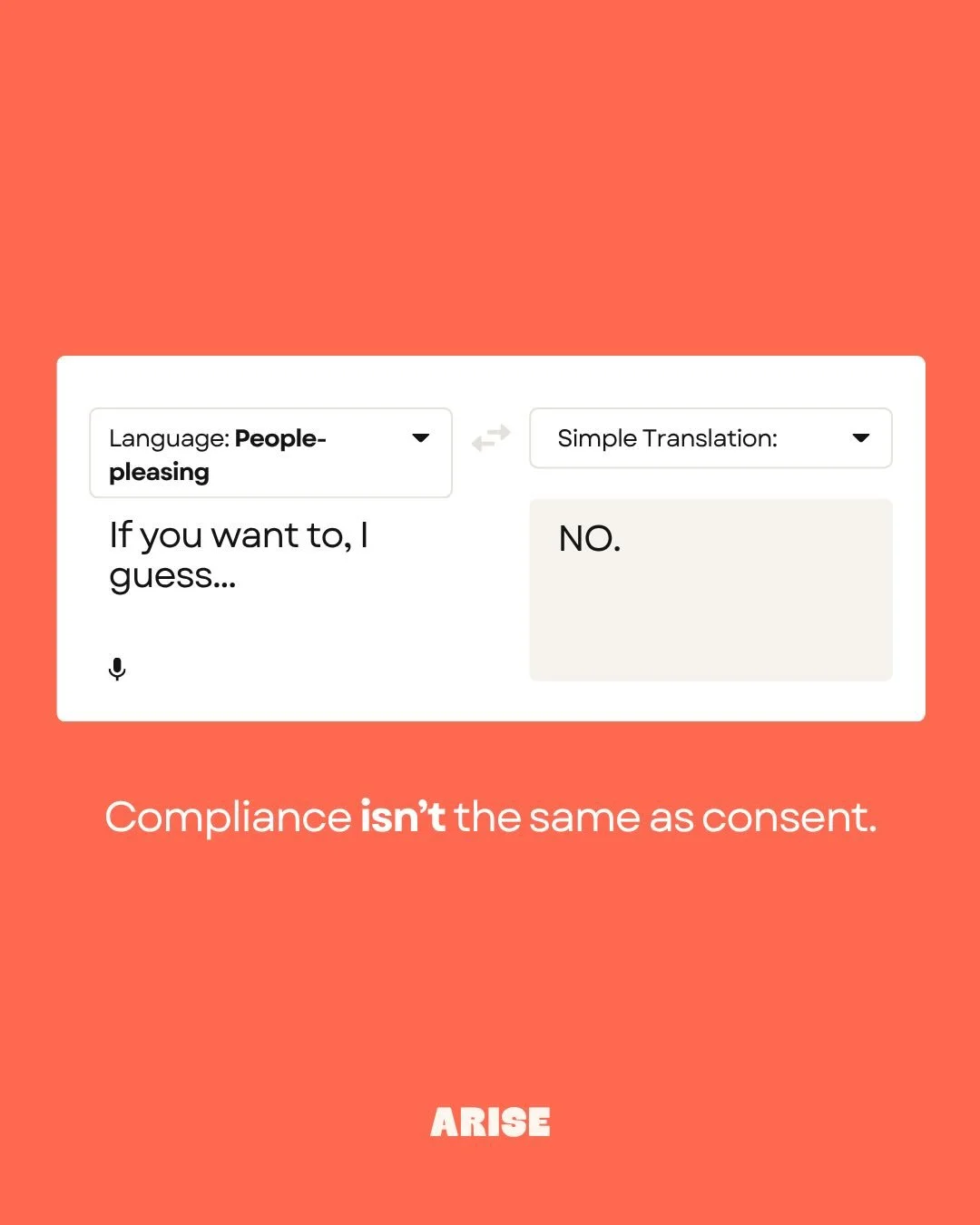
Every one of these self-defense myths is doing the same job: convincing women that they don’t belong in self-defense, or it’s their fault when they “fail.”
There’s no list of what you should be before taking up self-defense. Fearless, athletic, always fighting back, and never freezing is not the bar. You don’t have to hold yourself to some invisible standard. If you want to start practicing self-defense, you can. You are welcome here.
Personal safety shouldn’t require becoming a different person. It requires learning what your own body already knows how to do under pressure, and building on that deliberately instead of hoping it shows up on its own the one time it matters most. That's the foundation of Arise, and it's why every class starts there, in the body and the nervous system, long before it ever gets near a technique.
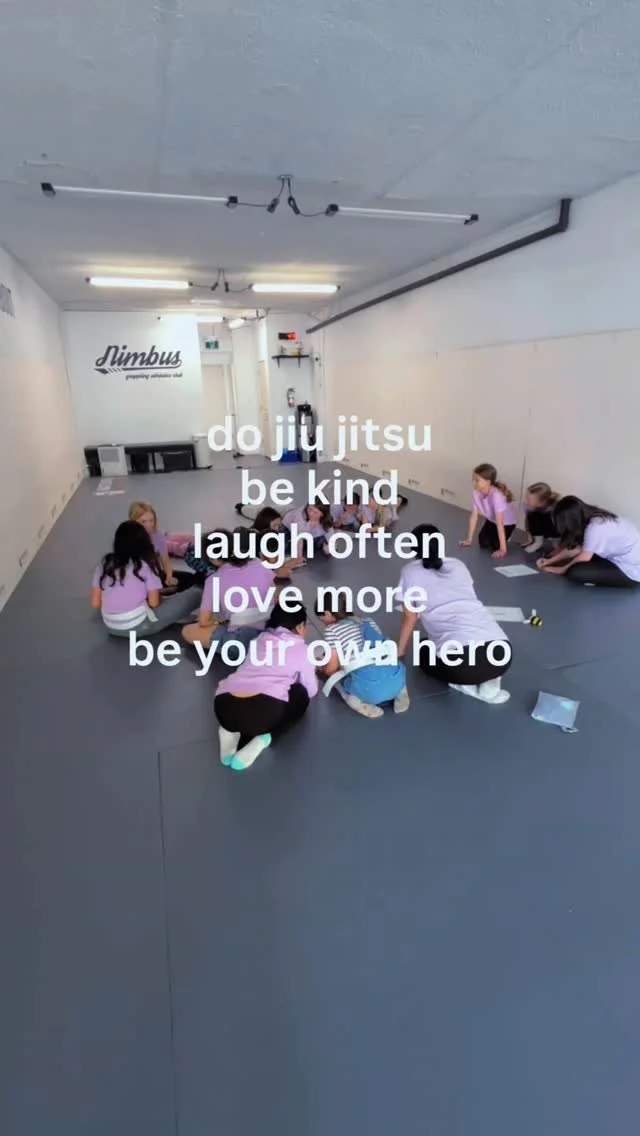
If you recognize yourself in even one of these six self-defense myths, come feel what that looks like in a room, with people who already understand it. If you want to learn more, join our weekly classes in Vancouver.
Arise Self-Defense offers empowerment self-defense programs for women and teens, kids, schools, and workplaces across Metro Vancouver. Our work begins long before any physical technique — with voice, boundaries, and the knowledge that safety starts with you.